

This essay is part of our American Cycle series. It is recommended that you also read “The American Cycle Part I (1776-1896)” and “The American Cycle Part II (1896-present)” to learn the basics of our theory of the American Cycle.
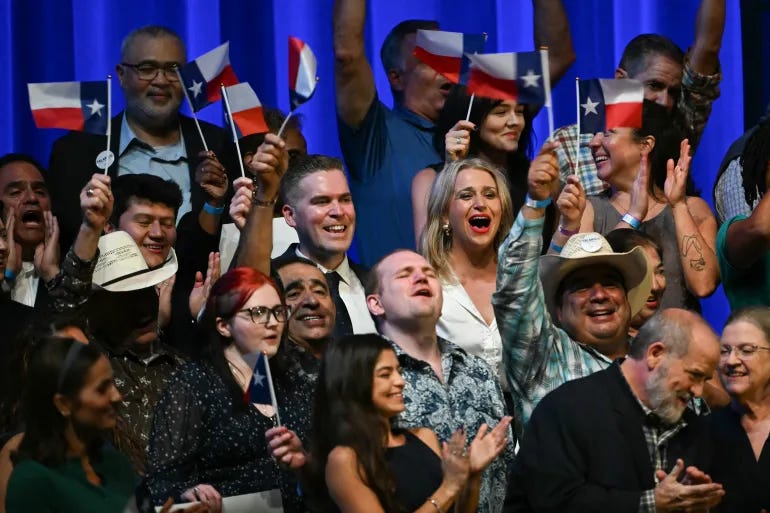
The Blue tsunami well and truly arrived last night, and the Democratic Party now will control the House and Senate with strong majorities in both.
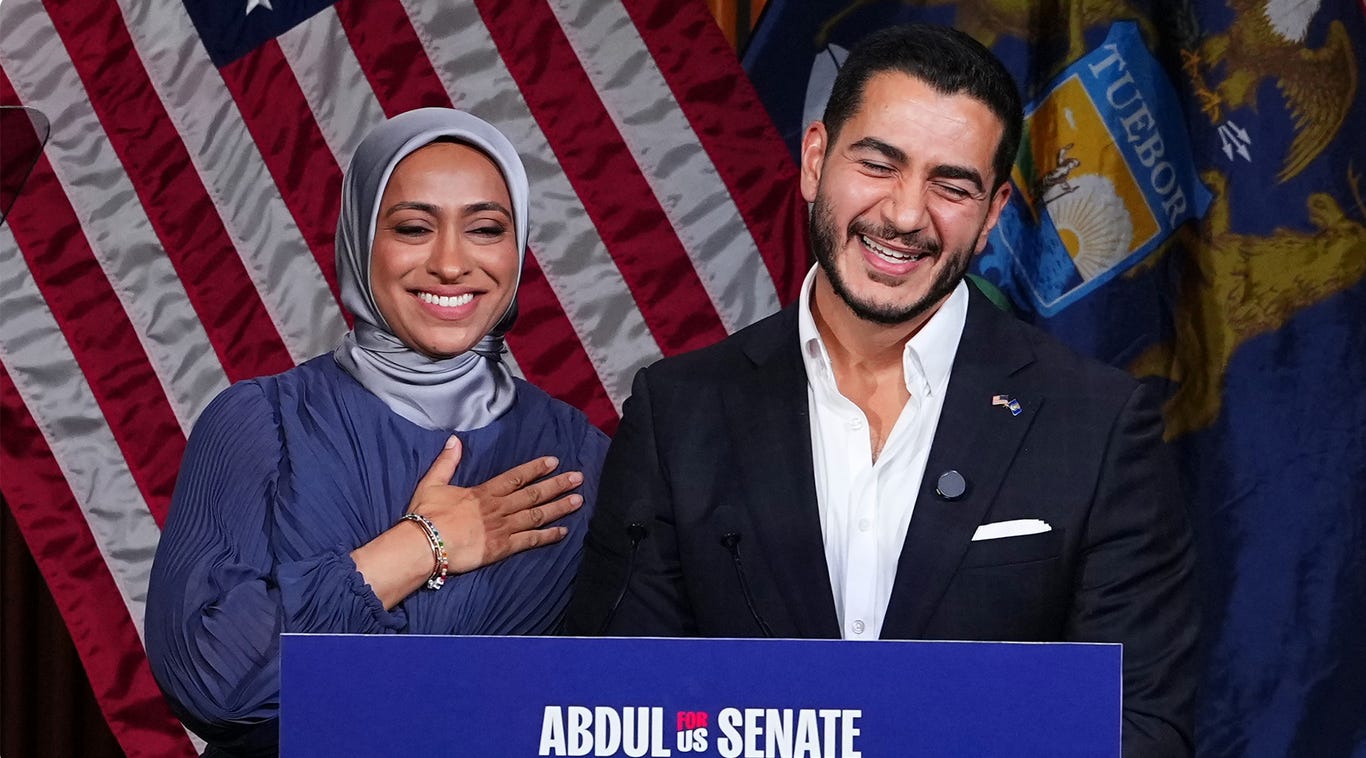
When all the votes are counted in Mississippi and Alaska, the Democrats might have a 56 seat majority in the Senate and control nearly 260 seats in the House. Tuesday night saw many political firsts for America—first black female governor, first Muslim senator, first openly gay senator, first female Native American senator, first female Native American governor, first Latina governor in Texas history, first female governor in Ohio history—and as more data comes out regarding voting demographics, we’ll surely have even more firsts and will probably hear the phrase “first since Reconstruction” quite a bit.
If the Democrats seize this moment, we may look back on this historic night as the dawning of a new era. And by seize this moment, I don’t just mean holding Donald Trump accountable. I mean implementing a bold new vision for the United States: a vision on par with American Reconstruction from 1865 to 1877.
The dilemma that the Democrats face is that since Reconstruction’s collapse, American politicians have not had the boldness, courage, and ambition of Reconstruction. The boldness that this moment requires would also be another first since Reconstruction.
These midterm results have created a genuine opportunity to break the American Cycle, continue America’s second Reconstruction, and usher in what I like to call the Democracy to Come.
To adequately understand yesterday’s Blue tsunami and what the Democrats must do once they control Congress, and possibly the White House in two years, I need to explain the meaning of the Democracy to Come, and to do this, I must explain three facets of my theory: autoimmunity, the Other, and the future.
Autoimmunity & Destroying Democracy
The idea of the democracy to come was first coined by French philosopher Jacques Derrida in the 1990s. Most of Derrida’s philosophical career centered around his concept of deconstruction, but later in his life (he died in 2004), he turned his attention toward democracy and political instability. A big part of his analysis of democracies focused on the idea of autoimmunity.
In the human body, an autoimmune disorder occurs when the body misdiagnoses a healthy part as unhealthy, and then attacks the “unhealthy” part. An autoimmune disorder can result in a person’s body killing itself from within because it mistook something good as being something bad. Derrida theorized that a democracy, in a similar fashion to an autoimmune disorder, could devour itself from within.
In the 1990s, Derrida’s concept of the autoimmunity of democracies seemed counterintuitive and did not align with the political theories of the day that proclaimed the quasi-perfection of democratic societies and the inevitability of progress; but as time has passed, the accuracy of his diagnosis has become clearer.
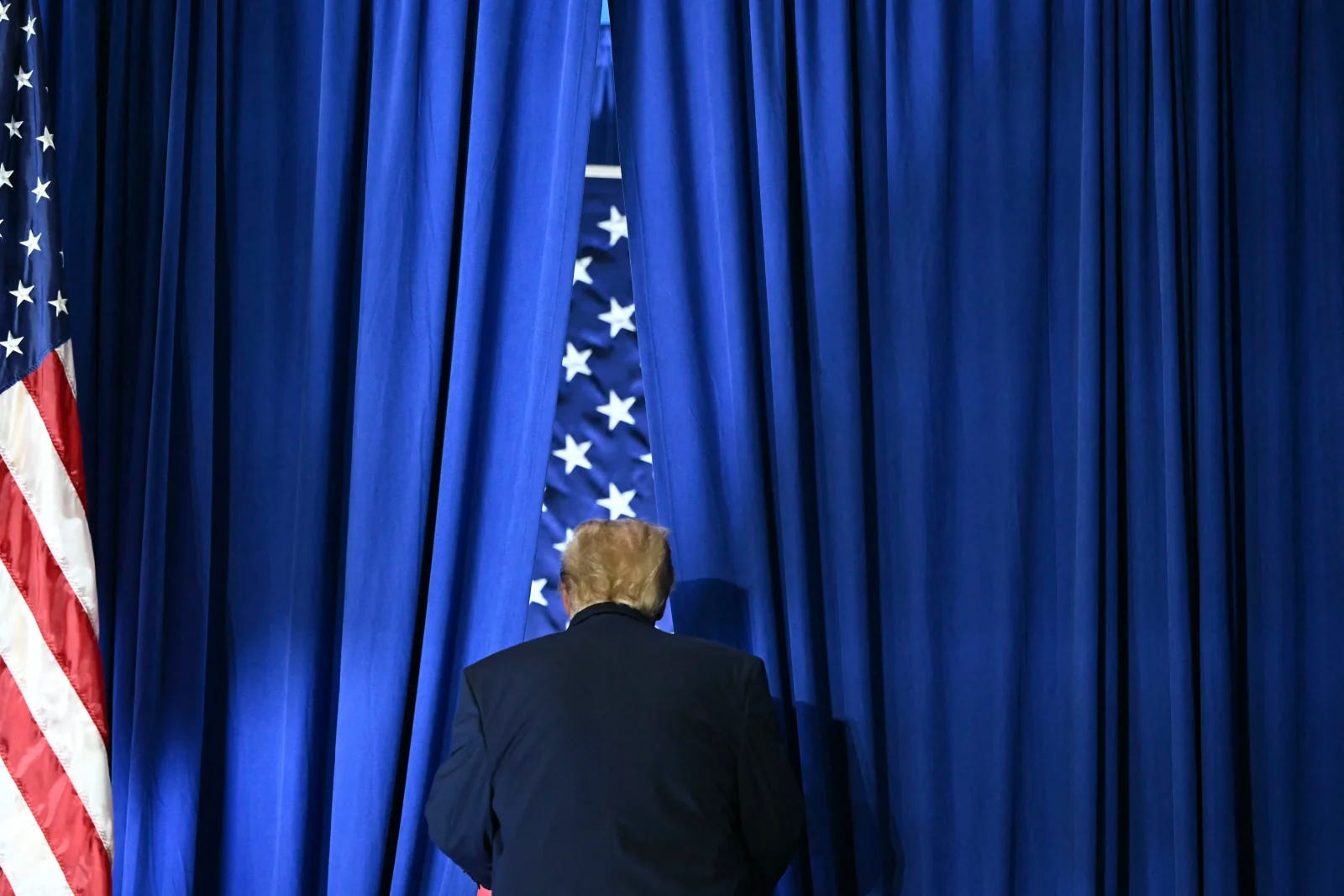
For Derrida, the people of a democracy, the demos, will inevitably misdiagnose a part of their democracy. No person or group of people always make the right decisions, so at some point in the life of a democracy, the demos will make the mistake of trying to destroy the healthy parts of their democracy and society. This destructive regression is unavoidable and inevitable, and in American politics, Donald Trump has been our autoimmune disorder.
Trump feeds on the healthy parts of our democracy, and drags us closer and closer to authoritarianism, economic disaster, and societal collapse every day. The Republican Party’s complicity and empowerment of Trump has also made them part of the disorder. These midterm election results were thus a repudiation of the sickness and harm that Trump’s policies have caused the American people in the name of “making America great again.”
Destroying the Affordable Care Act was a fixation of his first presidency and, in his second, he made Robert F. Kennedy Jr. the Secretary of Health and Human Services. A key part of his political ambitions has been to literally make more Americans sicker and unhealthy.
Beyond the literal, physical sickness that he has fostered, Trump has also crippled the economy, launched a pointless war with Iran, attacked the Constitution, shattered environmental protections, destroyed the East Wing of the White House, and empowered ICE to lawlessly kidnap and imprison thousands of people residing in the United States. He has also normalized vulgarity and unabashed corruption.
And as he does all of this, he proclaims that he is making America great again.
MAGA and Trump are a misdiagnosis by the American people. In the name of greatness, Trump, the Republican Party, and his supporters have made America into a sicker and more diseased place to live as we attempt to destroy ourselves from the inside.
Tuesday’s Blue tsunami was an emphatic attempt to flush out the illness, cure our society of this disorder, and get healthy again.
The Other & Saving Democracy
Derrida could diagnose that democracies suffered from autoimmunity, but he struggled to figure out the cure.
Eventually, he concluded that the cure would arrive from the Other, but he could not describe the Other (which could be a person, many people, or something else) because if he could describe and predict the arrival of the Other, then it would no longer be an Other. If it was predictable it would just be the same as everything else.
Derrida’s work was also shaped by that of French philosopher Emmanuel Levinas who theorized that justice occurred through the face-to-face interaction with the Other. Levinas also could not predict or control the Other, but he could recognize it when he saw it, and through recognizing the humanity of the Other, justice would emerge.
As white European men, Derrida and Levinas could only wait for the Other’s arrival to prevent democratic collapse and bring forth the arrival of justice, but as a Black man in America, I have interpreted their work differently—and in a way that they never could—because my people’s existence in America has always been that of the Other.
As a person of color, Derrida’s dilemma—or what he would call “aporia,” meaning an insurmountable impasse—was not a dilemma at all. The arrival of the Other as an equal human being with dignity has always been the connective tissue and soul of my community as we have fought against the inequality, racism, oppression, and dehumanization that has defined American society and democracy since the birth of this nation.
My community’s purpose has always been to bring forth our—or the Other’s—arrival. We exist as America’s cure to the autoimmunity of our democracy. And in the United States, the white majority has repeatedly misdiagnosed equality as a poison and inequality—via race, class, ethnicity, religion, gender, sexual orientation—as a cure.
In 1851—only a year after the Fugitive Slave Act—American physician Samuel A. Cartwright coined the term “drapetomania” to describe the “mental disorder” that had been spreading upon America’s enslaved population that had suddenly caused them to try to escape enslavement. In Greek, drapetēs means “runaway slave” and mania means “madness.” According to Cartwright, white Americans could usher in civility’s return and cure Black Americans of their disease by more aggressively, but not too aggressively, beating the enslaved to suppress their yearning for freedom while preserving their ability to labor for the enslaver.
The freedom of the Other has long been described as a sickness and disease in America, but the arrival of the Other has also saved our democracy, and, I would say, also laid the foundation for authentic democracy in America during Reconstruction.
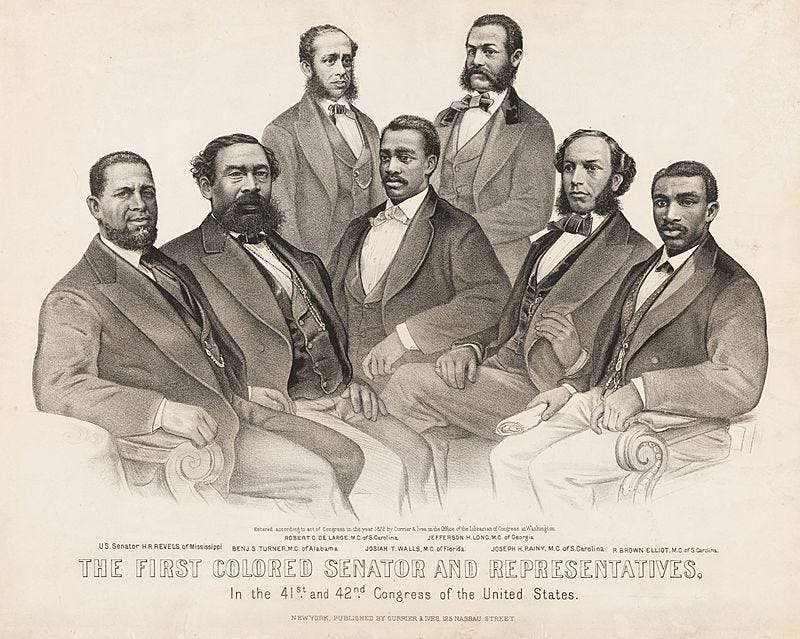
Reconstruction was the arrival of the Other as equal human beings with dignity under the law. The Fourteenth Amendment represented the first time that human equality became a part of the U.S. Constitution, and it created the foundation for equality to spread beyond the Black community and into other communities who existed as an Other in America.
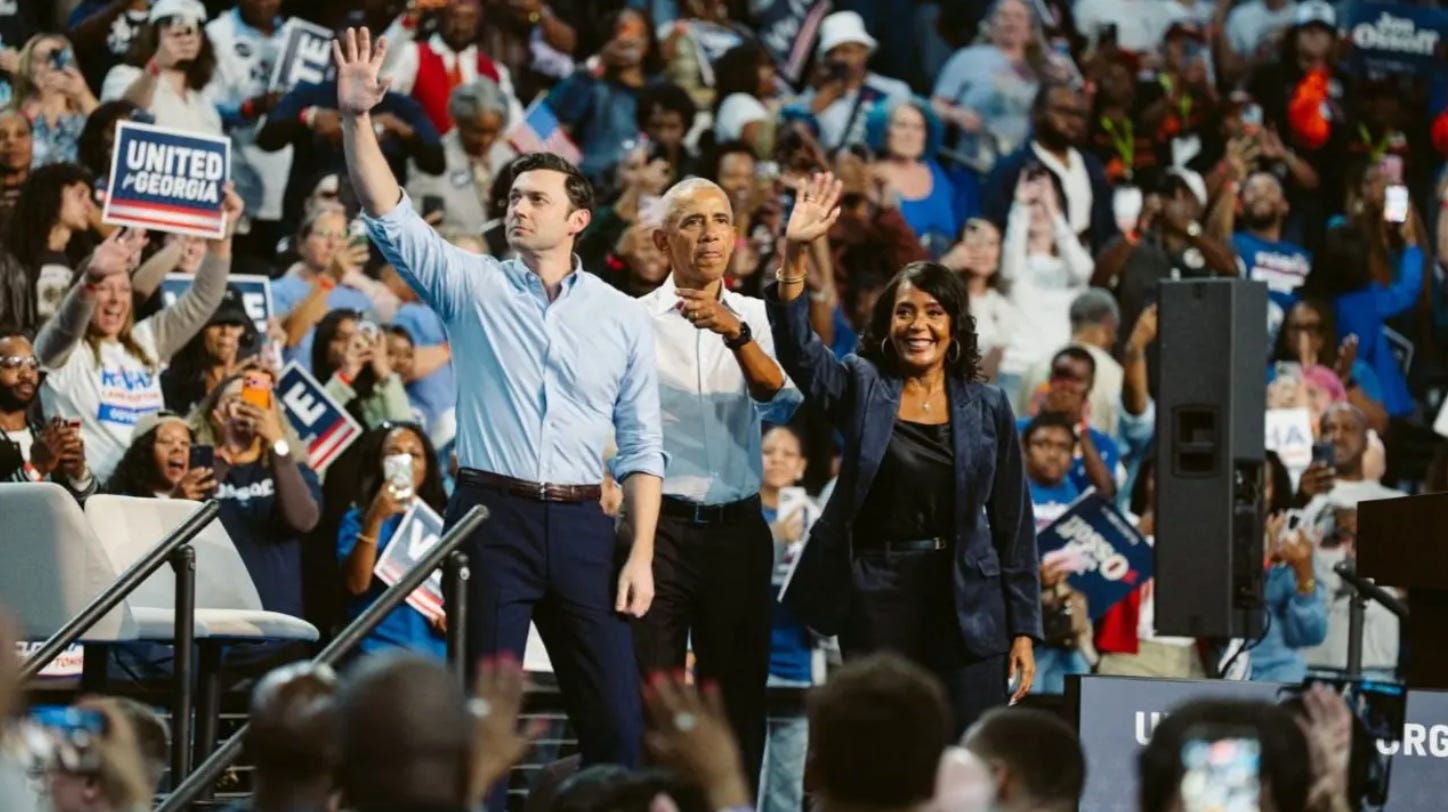
With Tuesday’s Blue tsunami came this generation’s far more diverse coalition of the Other. Black voters turned out at levels that, I suspect, were on par with Barack Obama’s two elections, which is also on par with Black voter turnout during Reconstruction.
Latinos, however, turned out at unprecedented levels, too. Trump’s deployment of ICE agents to kidnap and destroy Latino families was akin to the slave catchers during the Fugitive Slave Act; unsurprisingly, Latinos and their desire to preserve their culture and live with dignity was described as a disease. This was drapetomania in its modern form.
Rampant dehumanization, demonization, and the branding of Latinos as “illegals” made it abundantly clear that, under Trump, Latinos are definitely an Other in his America.
The disease of Trump’s America made many American communities—women, LGBTQ, Muslims, and even the white working class and farmers in the Midwest— and not just Black Americans and Latinos feel like the Other.
On Tuesday, the Other showed up in unprecedented numbers to save our democracy, but saving our democracy is not enough. If we don’t seize this opportunity to defeat autoimmunity altogether, we could just make another misdiagnosis in 2028 and resume the devouring of our democracy from within.
Going forward, the Democrats must courageously create a sustainable, nurturing, and equitable democracy akin to the boldness of Reconstruction and the spirit of Obama’s presidency. This is how we will continue America’s second Reconstruction and create the Democracy to Come.
“The Future to Come”
In Derrida’s concept of the Democracy to Come, the Other’s arrival was unpredictable and unplanned, and this made him think profoundly about the future – what it could bring and our relationship to it. And to express this new relationship, Derrida coined the term l’à venir meaning “the future to come.”
In French, the words le futur and l’avenir both mean “the future,” but Derrida considered both of them to describe the planned, predictable, and inauthentic future. They were the future of calendars and day planners. We need this form of the future to help make sense of our world, but the real, authentic future exists beyond our calendars and day planners.
Derrida coined this word so that it sounds like l’avenir because it is hard to predict that the same sound could create two different words. In French, the verb venir means “to come,” so the combination of l’avenir and venir creates “the future to come.”
The real, authentic future is unpredictable. This future is l’à venir or “the future to come,” and the unpredictable arrival of the Other also creates the future to come. When their arrival saves a democracy from its autoimmunity, it also creates the democracy to come.
Derrida’s framework was entirely theoretical, but it has repeatedly manifested in the United States.
Reconstruction was a future that America’s founding fathers never would have predicted. Few Americans in the 1850s would have foreseen that the upstart Republican Party, which was founded in 1854 on a platform of stopping the expansion of slavery into the northern states, would have won the 1860 presidential election and then won the Civil War. It would have been inconceivable to believe that that party would also ratify the Thirteenth, Fourteenth, and Fifteenth Amendments by 1870.
Reconstruction was America’s unpredictable, unplanned future, and it saved our democracy.
Similarly, the presidency of Barack Obama—132 years after the collapse of Reconstruction—was also unpredictable and unplanned. In 2008, many Americans still wondered if the United States was ready for a Black president, and America’s predictable, planned, and progressive trajectory indicated that Hillary Clinton would win the Democratic nomination and eventually the presidency.
I still vividly remember a conversation that I had with my grandfather in 2008, and he explained to me why he was supporting Clinton and not Obama. My grandfather told me that he had already seen white people take away so much from Black people that he could not imagine that they would allow for a Black person to become president. He loved Obama and what he represented, but he could not support him because he feared that if Obama rose too high, white America would take him away from us. Medgar, Malcolm, and Martin had all been taken away in his lifetime. He supported Clinton not because he liked her more, but because she was the predictable future that he believed America would allow to occur.
When Obama won on election night, my grandfather thought that a miracle had occurred. The impossible had now become reality. The real, authentic future had arrived. Within my framework of the Democracy to Come and the American Cycle, Obama’s presidency started America’s second Reconstruction.
Yet Obama’s arrival and the beginning of America’s second Reconstruction creates a paradox: how can the unpredictable arrival of the Other also fall within a predictable American Cycle?
The predictable unpredictability of the Other’s arrival in America derives from what is professed to be normal in the United States, and the now-unspoken belief that the Other can be controlled and “kept in their place.” America’s founding fathers created a nation with legalized chattel slavery that was intended to enslave African people in perpetuity. For most Americans, the United States’ expected norm since the nation’s inception was the perpetual oppression and exploitation of the Other, so even though the Other’s arrival may be predictable, it will always come as a surprise until we have a new normal.
America’s first Reconstruction was the future to come and the democracy to come and it created a new normal—which racist Americans worked to destroy—and the unpredictability of Tuesday’s Blue tsunami that resulted in countless firsts and the elevation of unplanned politicians whose rise has shocked the Democratic establishment amounts to another future to come and democracy to come.
We now have the chance to create a new normal, yet we need to look to the past to plan our future.
Reconstructionism & Back to the Future
The bludgeoning that the Republican Party took on Tuesday amounts to an unprecedented defeat whose closest parallel may be the post-Civil War Congress, when Republicans refused to seat the treasonous Confederates who brazenly attempted to return to Congress and act as though nothing had changed.
The progress of Reconstruction did not occur because of bipartisanship, but because a political party that valued equality, improving people’s quality of life, and preserving our democracy no longer had to compromise with an opposition party that wanted to violently shatter their principles.
Going forward, the Democrats need to have a boldness of agenda and vision that has been unprecedented since Reconstruction. The Democrats must ride the wave of the Blue tsunami and pursue their agenda as if the Republican Party has become nearly irrelevant. This is the scale of the political devastation that occurred on Tuesday.
Most significantly, the Democrats cannot focus on trying to find common ground with Republicans and building bipartisan support.
During Reconstruction, Republican President Andrew Johnson opposed the bold agenda of his Republican colleagues and attempted to find common ground with the weakened Democrats. To curry favor with the Democrats, he pardoned every Confederate soldier and not even Jefferson Davis, the president of the Confederacy, was convicted of treason.
Johnson’s amnesty of Confederate soldiers allowed them to form white supremacist militias such as the Ku Klux Klan and it empowered an essentially powerless Democratic Party. By 1877, the Democratic Party had ended Reconstruction and reclaimed control of the South.
Johnson was eventually impeached by his own party and is regarded as one of America’s worst presidents.
Today’s Democrats cannot afford to be the modern-day Andrew Johnson of our second Reconstruction. Instead they must have the boldness of Radical Republican Reconstructionists such as John Bingham, Thaddeus Stevens, Charles Sumner, Hiram Revels, Robert Smalls, and P.B.S. Pinchback.
This is what the moment calls for. This is what the Democracy to Come looks like.
Following Tuesday’s results, the Democrats now control enough state legislatures and governorships to pass the National Voter Compact and effectively abolish the Electoral College. This is something that the Democrats must do. Republican politicians discussed abolishing the Electoral College during Reconstruction, and if Reconstruction lasted more than twelve years, it is entirely possible that the Electoral College would have been abolished more than a century ago.
This is what thinking like a Reconstructionist looks like.
The absence of an opposition party during Reconstruction made it possible to amend the constitution three times in five years, so amending the U.S. Constitution and also state constitutions should become part of the Democrats’ agenda. My colleague Michael Pates and I have already drafted a proposed Twenty-Eight Amendment that continues the spirit of the Fourteenth Amendment. Our hope is that one day an iteration of our large, comprehensive amendment (over 1,600 words and nearly four times the length of the Fourteenth Amendment) becomes part of the U.S. Constitution, but we also hope that it inspires laws, policies, and amendments to state constitutions.
Reconstruction created the Thirteenth, Fourteenth, and Fifteenth Amendments, but it also created new constitutions for all of the defeated Confederate states.
The boldness and vision that the present moment and the future to come requires can be found by learning about, and drawing inspiration from, Reconstruction: America’s long forgotten and ridiculed past that also happens to have built the foundation for our true, authentic, and unprecedented democracy.
We are in the Democracy to Come, and knowing our past can help guide our future.