

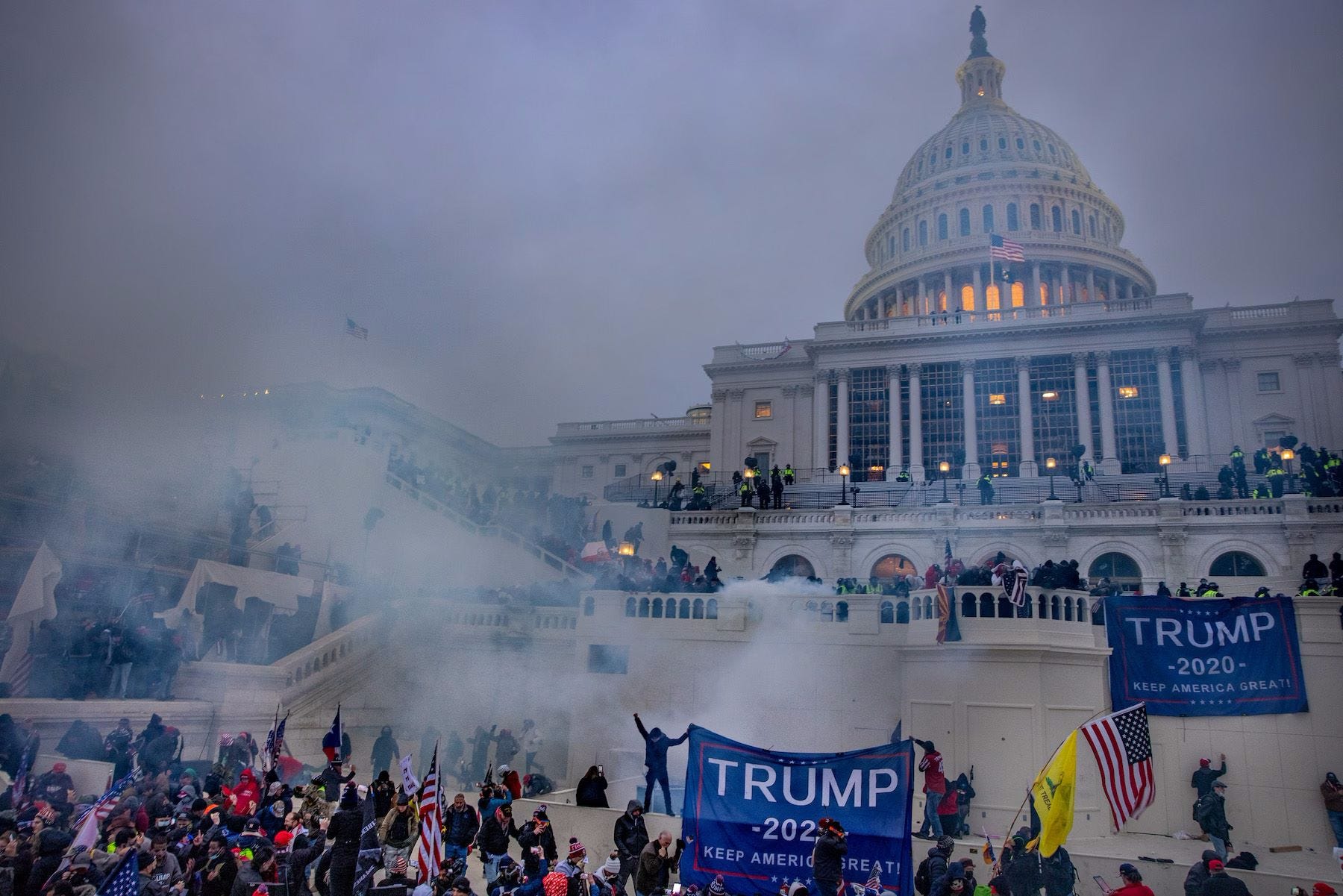
Five years have passed but January 6th must not be forgotten, and as we remember the storming of the U.S. Capitol by supporters of Donald Trump, I think we should look at this moment in our history as being an example of what French-Algerian philosopher Jacques Derrida would describe as the autoimmunity of democracy.
Derrida’s most well-known contribution to philosophy was deconstruction, but as he neared the end of his life (Derrida died in 2004), the focus of his philosophical work started to shift toward helping to explain the chaos of the modern world. However, due to the complexity of his writing and reliance on neologisms, the wisdom of his latter-years’ analysis remains relatively unknown. His idea of the autoimmunity of democracy comes from this era of his work, and was introduced in his books Specters of Marx, published in French in 1994 and in English in 1995; and Rogues: Two Essays on Reason, published in French in 2003 and English in 2005.
Rogues was written in the aftermath of the 9/11 attacks, when the United States government under President George W. Bush sought international support for the invasions of Afghanistan and Iraq. In Rogues, Derrida explored the meaning of sovereignty and in particular the meaning of “rogue states.” During this time, the United States government often described Middle Eastern nations as “rogue states,” and the supposed rogue-ness of these governments justified American invasions.
Derrida defines a “rogue state” as “a state that respects neither its obligations as a state before the law of the world community nor the requirements of international law, a state that flouts the law and scoffs at the constitutional state or state of law.”
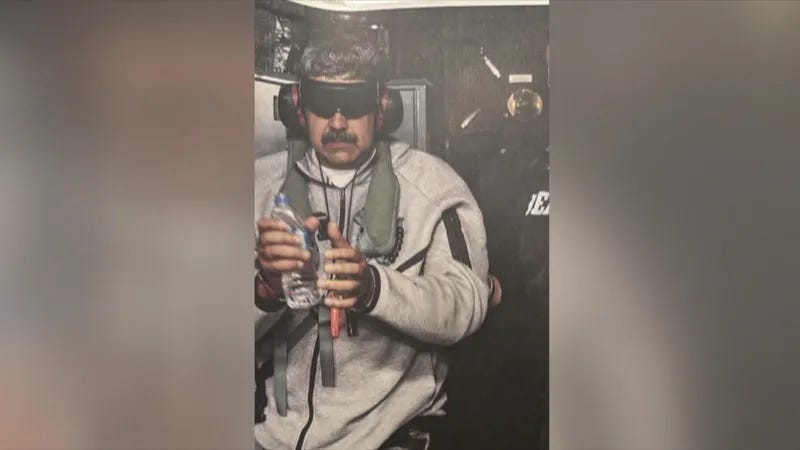
In lay terms, a rogue state would be a state that is lawlessness and that unabashedly flaunts its lawlessness, and this analysis helps us to better understand the events of both January 6th and Operation Absolute Resolve, by which Venezuelan President Nicolás Maduro was captured by U.S. forces on Saturday, January 3, 2026, as well as the modus operandi of the Trump Administration.
January 6th was an act of lawlessness and if it had prevailed, and resulted in Trump retaining the presidency through force and in complete disregard of the law, the United States would have become a rogue state five years ago. Trump’s return to the presidency four years later has emboldened and empowered his rogue agenda, and the normalized lawlessness of his presidency has resulted in a constitutional crisis domestically and a complete disregard of international law. There is no legal justification for Trump’s abduction of Venezuela’s president, but as January 6th showed, in addition to countless other examples, Trump has no concern for the law.
Also, Trump’s rogue agenda and the rogue state that the United States threatens to become does not mean that we should ignore the abuses Maduro inflicted upon the Venezuelan people. The illegitimacy of his presidency has been obvious for years. Venezuela had already become a rogue state, but one rogue state invading another is not an act of peace or bringing democracy to the Venezuelan people. It is just the expansion of rogue-ness. It is a virus of lawlessness supported by raw power and violence that aspires to spread throughout the world. Katie Miller, the wife of White House deputy chief of state Stephen Miller, has already implied that the Trump administration intends to invade Greenland next.
However, the rogue-ness of the present is not an isolated incident. The United States has long intervened in Latin America in a similar fashion, and the justifications for attacking Venezuela mirror those of the George W. Bush administration when they attempted to justify their invasion of Iraq. Three weeks ago, The Daily Show, the satirical news show, had a segment showing how the rhetoric for both invasions and the desire to control each country’s oil has remained the same despite the twenty years between them.
The ideas Derrida expressed in Rogues have been immensely significant, despite not being well-known, for two decades, and the recent abduction of Maduro and the five-year anniversary of January 6th should render Derrida’s ideas even more cogent today. As the United States grapples with the legitimacy and viability of its democracy, two fascinating concepts regarding democracy from Rogues warrant attention: autoimmunity and “the democracy to come.”
America’s Autoimmune Democracy
In both Specters of Marx and Rogues, Derrida describes democracy as being inherently autoimmune. The spread of H.I.V. in the 1980s and 1990s, despite not being an autoimmune disease itself, made more and more people aware of autoimmune diseases because H.I.V.’s destruction of the immune system made those infected with the virus more susceptible to dying from autoimmune disorders and previously preventable ailments. The notion of immunity and self-destruction had risen to the forefront of the collective global psyche.
An autoimmune disease essentially consists of the body misdiagnosing healthy cells as unhealthy cells and attacking them in an attempt to “save” itself from the “disease.” As it destroys the healthy cells, the body becomes less and less capable of fighting both the autoimmune disorder and other diseases to which the body has left itself more susceptible to. If the autoimmune disorder is not suppressed, the body eventually will disable or destroy itself.
Derrida described democracy as autoimmune because he viewed it as inevitable that the people (or demos) will misdiagnose a healthy facet of their democracy as unhealthy and attack it. No person or people are perfect, so you can never expect them to always make the correct diagnosis. Yet if a democracy denies the public the freedom to make mistakes or misdiagnoses, it would no longer be a democracy. Democracy’s failures and frustrations are inherently healthy.
January 6th was an expression of America’s autoimmunity. Trump supporters attacked the U.S. Capitol, and claimed that the presidential election results were incorrect and that the election was stolen from Trump. This was a literal and metaphorical attack on our democracy by American citizens because they misdiagnosed a relatively healthy and functioning democracy as unhealthy. They attacked the heart of America’s democracy in an attempt to “save” our democracy. This self-destructive act is therefore akin to an autoimmune disorder.
Trump’s presidencies, both the first and the second, have been an expression of our autoimmunity and with each passing day the disorder spreads throughout our body politic and destroys our society from the inside out. As the disorder spreads, and our laws and institutions are destroyed from within, the United States becomes increasingly rogue. As America celebrates the erasure and negation of laws as a “cure” for our ailing democracy, we flaunt our lawlessness, and revel in our new status quo as a rogue state. This is our present reality.
We have become a self-diseased and self-corrupted rogue state whose leaders seek to use the power of our autoimmune disorder to infect virtually everything, everyone, and every nation that we touch. We want to revel in and flaunt our ability to destroy and exploit the healthy parts of society. Rogue America’s autoimmunity produces a self-reinforcing race to the bottom that will continue to amaze the world in its ability to reach new lows. Our nadir exists as a temporary placeholder that precedes the discovery of a new nadir.
Derrida’s analysis prompts a profound insight that challenges the long-held belief in the inevitability of democratic progress: If democracies must eventually experience an autoimmune response to their own healthy functioning, the demos will eventually devour the democracy and regress it into a rogue state that embraces fascism and authoritarianism as (falsely) “healthy.”
This is obviously the United States’ current trajectory. But while Derrida believed that being afflicted with an autoimmune disorder was the fate of all democracies, he did not believe that democracies were destined to devour themselves. They may mistakenly devour some healthy parts, but it is not inevitable that they devour the entire body.
To save our democracy, we must be able to combat our autoimmunity, and for Derrida – and for The Reconstructionist – the solution for our autoimmune, democratic collapse resides in “the democracy to come” (the subtitle on our masthead).
Reconstruction and the Democracy to Come
In French, the nouns le futur and l’avenir both mean “the future” and the verb venir means “to come,” and Derrida, in his love for wordplay and neologisms, expanded his philosophical focus to his concept of l’à venir meaning “the future to come.” L’avenir and l’à venir sound nearly identical, but for Derrida, they represented two different concepts of the future.
Le futur and l’avenir represented the planned and predictable future. These are the futures that you can organize on your calendar or can build a five-year or ten-year plan around. These iterations of the future are important and essential, and can help us feel like we have a sense of control in the world, but this sense is false. We cannot predict the future, so the “true” future is unpredictable. This future is l’à venir and the unpredictability of the future derives from our encounters with the Other – that is, thing(s) and people that cannot be predicted but are eventually encountered.
While the Other is unpredictable, its unpredictability is not synonymous with danger. Pleasant surprises are also unpredictable and equally constitute encounters with an Other. For Derrida, democracy is largely defined by its relationship with the Other, and this is the democracy to come, or la démocratie à venir. A healthy democracy that can combat its autoimmunity is one that has a good relationship with l’à venir. Indeed, the healthiest moments of America’s democracy derived from the eras when we had a healthy relationship with the Other.
Today, Zohran Mamdani has been the mayor of New York City for less than a week, but he represents an iteration of an Other that a democracy requires to not regress into a rogue state. No one could have predicted that a 34-year-old Indian-Muslim from Uganda would become the mayor of New York City less than a year after Trump returned to the White House. Likewise the presidency of Barack Obama was another example of the unanticipated arrival of the Other to halt the progression of our autoimmunity.
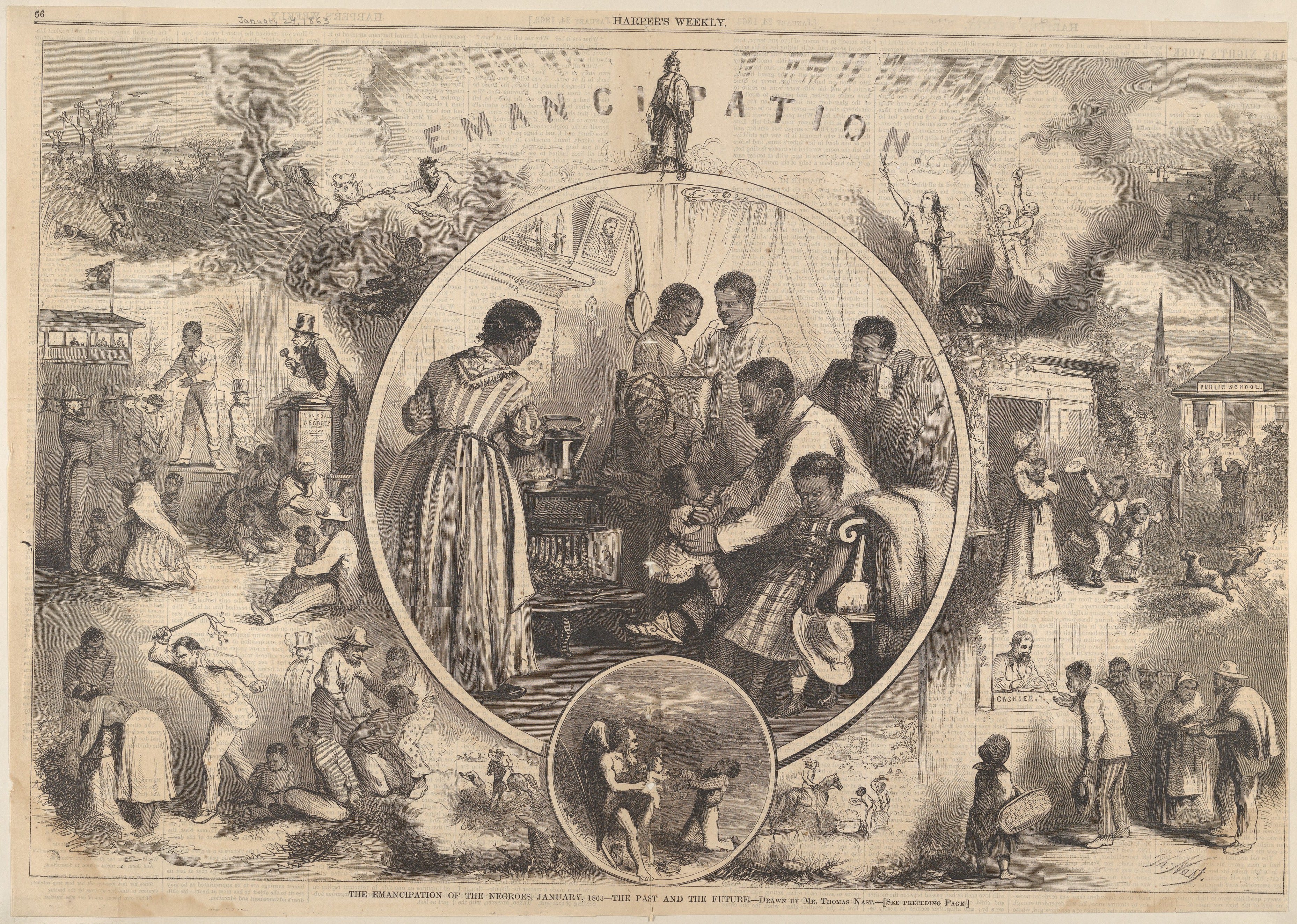
The American era of Reconstruction from 1865 to 1877 represents the United States’ most profound attempt to defeat our autoimmune disorder by embracing the Other. Following the Union’s victory in the Civil War, the Republican Party commenced Reconstruction, the core agenda of which was to include the formerly enslaved as active participants in American democracy. Reconstruction consisted of forging a healthy relationship with the Other and all the unpredictability that comes with it. Reconstruction was the democracy to come, more than a century before Derrida coined the phrase.
Reconstruction was not predictable or part of the grand American plan. Reconstruction was not l’avenir, it was l’à venir. Few Americans would have predicted that slavery would be abolished and Black Americans would become citizens just a decade after the Supreme Court’s Dred Scott decision denied their rights. And America’s founding fathers never envisioned the enslaved becoming liberated citizens with voting rights.
In fact, American society continues to do a disservice to the memory of Reconstruction by depicting the progress of that era as predictable and inevitable. Our society has been inclined to express this false narrative, however, because the United States has long embraced an unhealthy relationship with the Other. People of color have always been the Other in the United States, and a healthy and equitable relationship with the Other was never supposed to exist within a nation built upon white dominance and white supremacy. Equality undermines white dominance, so in order to sustain a white-dominated narrative of American history, the unpredictable progress of the Other is often depicted as the predictable progress of America’s white heroes.
Further, America’s autoimmunity and descent into a rogue state grows exponentially once the Other grows in stature and becomes an increasingly equitable member of our democracy. The Civil War was fought over slavery and was an attempt by much of America to destroy the country over slavery’s potential demise, which they misdiagnosed as unhealthy to the national (their) interests. The Confederacy was thus a rogue state. Since the end of the Civil War, the American South has always relied on a normalized lawlessness and a desire to circumvent the law in order to sustain an unhealthy, oppressive relationship with the Other.
During Reconstruction, racist white supremacist militias including the Ku Klux Klan terrorized and murdered Black Americans and their white allies, but they also actively suppressed Black and white Republican voters, and frequently claimed that elections were fraudulent when their candidate did not win. On September 14, 1874, the supporters of defeated Louisiana gubernatorial candidate John McEnery disputed the election results and attacked the New Orleans City Hall, and temporarily installed McEnery as the new governor. To defeat the insurrection President Ulysses S. Grant had to send federal troops into New Orleans. However, following the collapse of Reconstruction, Louisiana’s new government decided to erect a monument to honor the supporters of McEnery. The monument was called the Battle of Liberty place and resided in the heart of New Orleans from 1891 until 2017, when Louisiana governor Mitch Landrieu had it removed.
These states regularly celebrate their history of regressing into violent rogue states and they often threaten to destroy the government and become a rogue state again so that they can sustain inequality. Trump’s presidency has spread American autoimmunity beyond the confines of the South, and has made it our national and international agenda.
The United States’ predictable future consists of our autoimmunity devouring our democracy from within. If we are to save our democracy, we must embrace the better democracy to come and the unpredictable Other to help us realize it.
Thank you for this, Barrett!
Hoping you and your family are well and happy.
Beautiful new year to you, with a truckload of real Reconstruction.
🫂 —Sharon McSweeney
(in Richmond, VA)