

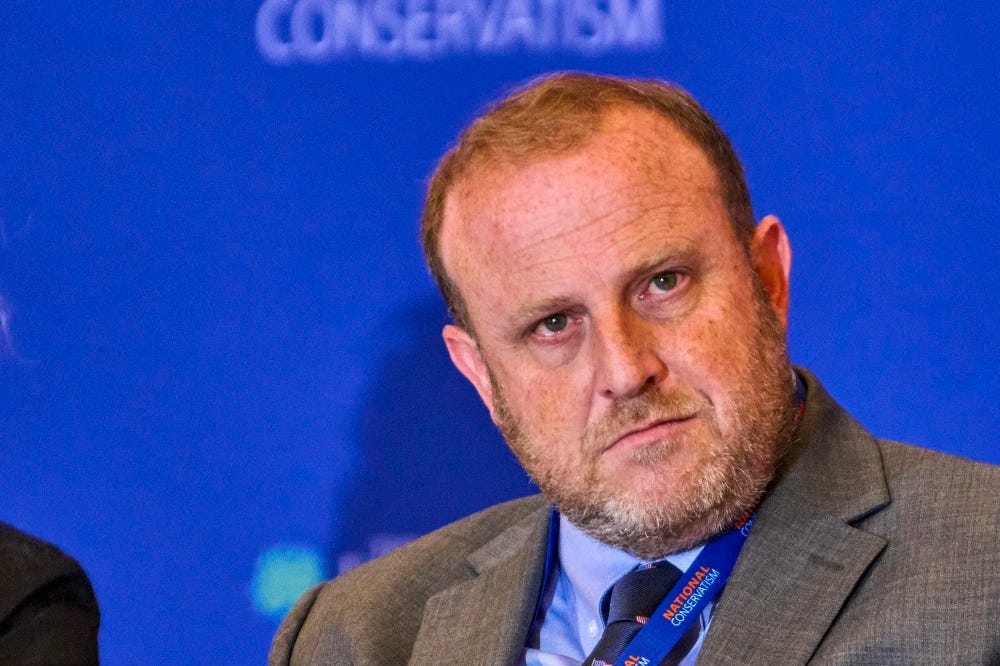
Jeremy Carl’s stuttering defense of white culture during his Senate confirmation hearing last week has caught national attention and garnered multiple thought pieces, but one facet of his ignorant ramblings has been consistently overlooked.
Carl struggles to define white culture because the culture’s survival depends on being loosely defined. This problem is much greater than the damage that will ensue following his still-plausible confirmation and speaks to a debilitating flaw within American society. Let me explain.
During the hearing, Carl spoke about white culture being under threat from other cultures and how America will supposedly become worse off if white culture is no longer the dominant cultural framework of the nation. Regardless of his nonsensical references to white food, white music, and Anglican traditions, his main concerns were that whiteness would not survive if it was not the dominant culture in America and that America would be worse off without white domination.
For Carl, white culture is a culture that must dominate other cultures. It is a culture dependent on inequality and as a result, is a culture that is incompatible with the principles of equality that are essential to a stable and functional democracy. Carl struggles to define whiteness partially because his answer would describe a culture that is incompatible with the society most Americans want to live in.
In the absence of a clear definition, Carl’s notion of whiteness must exist as a feeling, aspiration, and reference point to a supposedly idyllic time. As a result, Carl’s “white culture” empowers him to cherry-pick any attribute of European or American culture that he likes and claim it as being part of white culture. The parts of European and American culture that he does not like or facts that undermine his narrative are dismissed as irrelevant or meaningless. This is the absurdity of a definition-less identity, but this is also white culture.
White culture exists as a myth without a clearly understood and accepted definition. In America, this lack of a universally understood definition of white culture exists because of American society’s entrenched racial division and inequality. Racial inequality both requires and sustains the myth of white culture. Racial inequality is vital for sustaining the definition-less myth of white culture because language is inherently equal.
Language has meaning only because the meaning of each word is shared equally. Each person knows the meaning of each word, and this allows them to communicate. Language is a manifestation of equality, so a culture that is built upon inequality will progressively destroy a language and the culture that the language expresses. The inequality of white culture means that white culture does not aspire to have a clearly understood definition that everyone in society understands equally. Instead, white culture aspires to make people feel like they understand the meaning of whiteness and white culture, while still allowing whiteness to unequally dominate American society.
Carl’s attempts to define white culture sound absurd and moronic, but that is because his idiocy is essential to the culture’s survival: First, were he to clearly state the definition of whiteness that America’s founding fathers professed and ingrained into our Constitution, it would be obvious that this definition is incompatible with democracy. Second, were he to express this definition, it would be a manifestation of the linguistic equality that is antithetical to the inequality and dominance inherent to Carl’s white culture.
Defining white culture would thus result in the “white erasure” that Carl fears and hopes to prevent. This is why powerful morons who spew gibberish and praise a fabricated white ideal are the epitome of this culture.
Carl fits this description. So do Donald Trump, Stephen Miller, Karoline Leavitt, and everyone associated with the Trump administration. This is why everyone knows that Carl will get confirmed to a senior State Department post regardless of what he said in his hearing. Their goal has always been to obtain enough power and create social inequality so that their words do not matter. The meaningless spectacle of his hearing was also an expression of his white culture.
However, his hearing also highlights a tension within white culture that has existed in earnest since American Reconstruction. The senator who most vigorously challenged Carl’s ideals was Chris Murphy, who is also a white man. Reconstruction was the first era of American society where racial equality became an ideal that some white Americans actively attempted to create. The tension between Carl and Murphy exists due to the unequal and equal concepts of whiteness and how, or if, they can exist within a stable democracy that values equality.
Carl’s hearing displayed not just cultural or racial tensions in America, but also dialectical tensions, too. What kind of dialogue and society can we have with a white culture committed to inequality? Ironically, the Germans can help give us the answer.
Hegel’s (and Carl’s) Master-Slave Dialectic
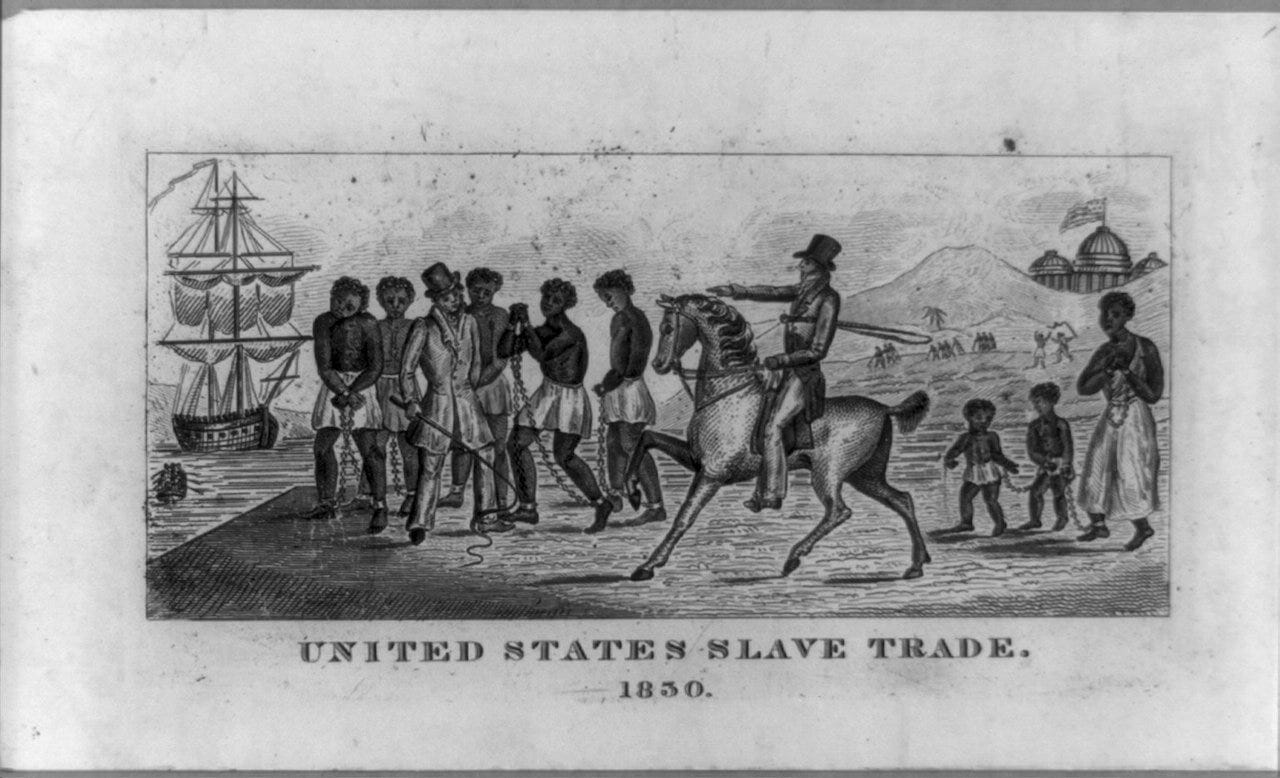
In the Phenomenology of Spirit written by German philosopher Georg Wilhelm Friedrich Hegel, the philosopher formulated his Herrschaft und Knechtschaft dialectic that is also known as the “lord-bondage” or “master-slave” dialectic. This is supposed to be the type of dialectic or relationship that can exist between unequals.
In this dialectic, the master has all of the power and none of the responsibility, and the slave has none of the power and all of the responsibility.
Hegel’s dialectic is normally discussed as a theory and not as the dialectical structure for an entire society, but considering that slavery was foundational to American society and most of our early presidents owned slaves, I believe it is worth discussing this dialectic as a means for understanding American society, white culture, and race relations.
Starting in colonization, white Americans, and especially those who owned slaves, positioned themselves as the “master,” and they positioned African people as the “slave.” White people had all of the power and Black people had none. White Americans created the “one-drop” rule that stated that one drop of African blood would erase one’s whiteness. This inequality and division formed the basis of the white race and white culture in America, and also the Black race and Black culture. Racism, inequality, and oppression were the foundations of white culture. This is the culture Carl wants to protect.
In the master-slave dialectic, due to having all of the power and none of the responsibility, the master can claim responsibility for whatever he wants. If the enslaver has a great crop yield on the plantation, the slaveowner will proclaim himself to be a genius and a great businessman. If he has a poor crop yield, then all of his slaves are lazy. The slaveowner also never takes responsibility for the terror that they inflict upon the oppressed, and instead creates a narrative blaming the slave for their oppression.
In 1851, for example — a year after the passage of the Fugitive Slave Act — a Mississippi physician named Samuel A. Cartwright coined the term drapetomania to describe the mental illness inflicting enslaved people who attempt to run away. Drapetomania derives from the Greek word drapetes meaning “a runaway slave” and mania meaning “madness, frenzy.” Cartwright explained that slaveowners who were too nice and treated their slaves almost like equals caused drapetomania. Likewise, slaveowners who were too brutal also caused the disorder. Slaveowners needed to find the sweet spot between equality and brutality that would prevent Black people from wanting to be free, yet at the end of the day, Cartwright said that the best cure for drapetomania was “whipping the devil out of them.”
Here the master-slave dialectic has created an illness out of thin air that instructs the oppressor to terrorize the oppressed, while also blaming the oppressed because they are supposedly inflicted with a disease. According to drapetomania, and American white culture at the time, terrorism acts as the cure for freedom and equality causes a devilish disease.
Additionally, the South also professed a narrative of being hospitable and exceptionally polite. The notion of Southern hospitality still exists today, but what is missing from the narrative is the fact that Black people would get beaten and punished if they were not exceptionally polite and deferential to white Americans. My uncle, who is still alive today and grew up in Charleston, South Carolina, has told me about how he was not allowed to walk on the same side of the street as a white person, and that if he saw a white person coming his way, he had to cross the street. This supposed hospitality is a byproduct of terror that still lingers today, but within this unequal dialectic the narrative of the oppressed is often ignored or erased.
The language of this dialectic is therefore inherently dishonest.
The power that white culture wields means that they aspire to never be responsible for their actions, and that an Other is always to blame. You can see this dynamic manifesting today in practically everything that Trump does. We can start with the Access Hollywood tape and go all the way to the Epstein Files and the posting on Truth Social of a racist image of Barack and Michelle Obama as monkeys. Trump has never been punished for any of this, but the lack of punishment and accountability is actually a key aspect of white culture and the power over others that it needs to survive. In fact, Trump has reached the pinnacle of American politics and society precisely because he is masterful at using his power to avoid responsibility.
Trump is also exceptionally good at blaming other people for any and every mistake. His entire political career consists of blaming immigrants, people of color, and Democrats for everything that is wrong with society. Trump supporters have even coined a pseudo-science disease called “Trump Derangement Syndrome” to explain the supposed insanity of anyone who disagrees with him.
The dialectic of the 1800s before Reconstruction is practically the same as ours today.
The master-slave dialectic represents a very bleak and tragic way of life, and no culture should be built upon it and no one should want to defend it, but here we are.
Intriguingly, as the unequal relationship between the master and the slave continues, the master will gradually grow weaker and weaker because their way of life is dependent upon the slave. They might never admit this reality, but a life of being irresponsible and taking advantage of other people is ultimately enfeebling. If slaves cook your food, clean your house, and fuel your business, you’ll one day realize that your way of life depends on their staying oppressed and never realizing that they could have a better life without your oppression.
Not only will equality feel like an erasure of the “master’s” culture, the “master” will also fear the embarrassment and shame of being held accountable for the terror and irresponsibility that has shaped their life and culture. There may also be a fear that the formerly oppressed will treat their old oppressors how they treated them. This is the anxiety of white culture today.
Additionally, as the oppressed live a life without power, but with responsibility, they will actually grow stronger. Despite living within inescapable terror, they are still responsible for every facet of their life. They are not responsible for the injustices that befall them and the violence inflicted upon them, but they are responsible for getting back up. They are responsible for their family, friends, and community. They are responsible for making a life for themselves that cannot be broken despite the terror that will be unjustly inflicted upon them. They are responsible for finding joy and hope from the seemingly inescapable darkness of American life.
Eventually, the oppressed’s fight for freedom and their unbreakable humanity grows so powerful that it can topple the oppressor. In the United States, we call this the Civil War.
Reconstruction and White Culture
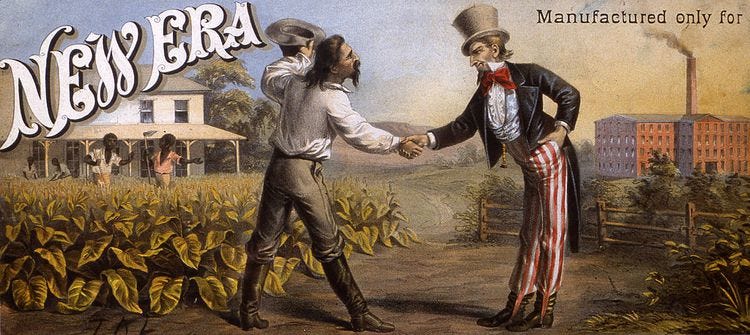
Reconstruction accomplished many things, but most Americans ignore the fact that this era also created a new iteration of white culture. Reconstruction created a white culture that wanted to live equally with Black Americans.
Prior to the Fourteenth Amendment, the word “equal” was essentially non-existent in the Constitution. This era prompted a national discussion on the meaning of freedom and equality, and the distinction between legal and social equality. Legal equality meant that people had equal rights under the law, but social equality meant that Black and white people could coexist equally in American society.
The purpose of Reconstruction was about creating social equality in addition to legal equality, and government projects such as the Freedmen’s Bureau are an example of this. Additionally, by focusing on social equality, the founders of Reconstruction understood that Black Americans needed additional services to undo America’s entrenched social inequality.
Unsurprisingly, in 1866, racist American President Andrew Johnson vetoed the Civil Rights Act of 1866 and the Freedmen’s Bureau Bill, both of which supported social equality, because he believed that they amounted to discrimination “against the white race.”
In 1866, Congress passed both bills over Johnson’s veto.
The opponents of Reconstruction had to reluctantly concede legal equality, but they refused to accept social equality. Black codes and the theory of “separate but equal” derived from the argument of allowing legal equality while denying social equality. Legal equality without social equality created Jim Crow.
The prospect of a white culture that could live equally alongside Black Americans infuriated the former Confederates, and they felt compelled to clarify the meaning of white culture to emphasize its incompatibility with social and racial equality.
In 1868 — the same year as the ratification of the Fourteenth Amendment — Dr. John H. Van Evrie published White Supremacy and Negro Subordination; or, Negroes a Subordinate Race, and (so called) Slavery Its Normal Condition. This book is the first published reference of the term “white supremacy” in America, and “white supremacy” was not used to express a toxic iteration of white culture, but to explain the core principles of white culture and white identity in America.
According to white Americans, white supremacy was synonymous with white culture, and the white Americans who wanted to live equally with Black Americans were described as race-traitors. Equality was a treasonous act against white culture. It should surprise no one that Carl’s and the Trump Administration’s defense of white culture is also destroying civil rights in America.
Ironically, the defenders of white culture in the 1850s and 1860s who feared equality, often described this alleged threat as the Mexicanization of the United States. White culture was not fearful of a Mexican invasion, and instead feared that white Americans might embrace the social equality and race-mixing that Mexicans had been doing for centuries.
As a result of the Mexican-American War that ended in 1848, white Americans became exposed to Mexican culture, and the normalized race-mixing of Mexico horrified white America. Starting in the 1500s with Hernán Cortés’s arrival and conquest of the Aztec Empire, Spanish conquistadors sired children with Indigenous women, and unlike white American culture, they claimed these mixed-race children as their own. The relationship between the Spanish and Indigenous population was obviously unequal and an extension of the master-slave dialectic, but the dialectic started to change once they had children.
In 1522, an Indigenous woman known as La Malinche gave birth to Cortés’s son, Martín Cortés, who was known as “El Mestizo” meaning “mixed.” When Cortés returned to Spain, he brought his son with him and even got approval from the Pope to recognize Martín Cortés as his heir. Hernán Cortés treated his son with a level of humanity that was still unimaginable to white Americans three hundred years later.
Thomas Jefferson never recognized the children he had with Sally Hemings as his own, and during his lifetime he never freed any of his children or Sally Hemings.
Mexico’s mestizo culture enraged white Americans in the 1800s and they especially did not like the fact that Mexico’s second president Vicente Guerrero was of mixed African and Spanish descent, and abolished slavery in most of Mexico in 1829. (Due to the influx of white slaveowners, Texas objected to the abolition of slavery, so Guerrero gave them an exception. Mexico eventually lost Texas in the Mexican-American War, and Texas became the last state to abolish slavery in America.)
America’s white culture of the 1860s feared social equality and the threat of Latino culture, and viewed both as a threat that could erase white culture. The more things change, the more they stay the same. This iteration of white culture brought about the end of Reconstruction and disempowered the white Americans who professed social equality.
The white Americans who wanted to live equally with Black Americans had basically just the twelve years of Reconstruction to do so, and they faced fierce opposition from other white Americans. Upon Reconstruction’s collapse in 1877, the potential of social equality collapsed, too, and it did not reemerge in American society until the Civil Rights Movement of the 1950s and the fight to end segregation.
Yet, the 1860s still birthed a white culture that wanted to live in equality, but this new iteration of whiteness tragically did not create a different name for itself.
In the absence of a new name and identity for the white Americans who embrace equality, the master-slave dialectic will incline all white Americans to feel as though they have a shared identity despite having completely different philosophies and ways of life. This will occur because the emphasis on power and irresponsibility will encourage them to craft an idyllic narrative of white culture that erases or minimizes the terror that the culture has long been responsible for.
The Trump administration’s policy of erasing Black history and any historical references that could depict white culture in a negative light is a manifestation of the master-slave dialectic.
It becomes much easier for the white Americans who champion equality to unite with the white Americans who champion inequality, if the shared narrative of white culture erases the terror that white culture has always depended on. White Americans will be encouraged to focus on how their shared European ancestry makes them the “same,” and disregard how their actions and beliefs prove that they are different.
These two factions of white culture will eventually split and clash with each other once their authentic cultural beliefs become clear, but the bigger problem is that they once thought that they had the same beliefs and same culture.
Additionally, the linguistic and inherent dishonesty of the master-slave dialectic has resulted in our society professing that the whiteness that champions equality is the authentic expression of white culture, and that the whiteness that embraces inequality is a toxic derivative that should be known as “white supremacy” or “white nationalism.” The irresponsible power that has been a part of whiteness since colonization, still allows white culture to profess a false narrative and since they have been telling these lies for centuries, it is only natural for well-meaning Americans of all races and ethnicities who embrace equality to believe that some of the lies are the truth.
This is another organic manifestation of not wanting to define white culture, and while Carl’s sad confirmation hearing demonstrates the absurdity of America’s reluctance to define whiteness, our entire society has shared this reluctance for centuries.
Liberating Names and Definitions
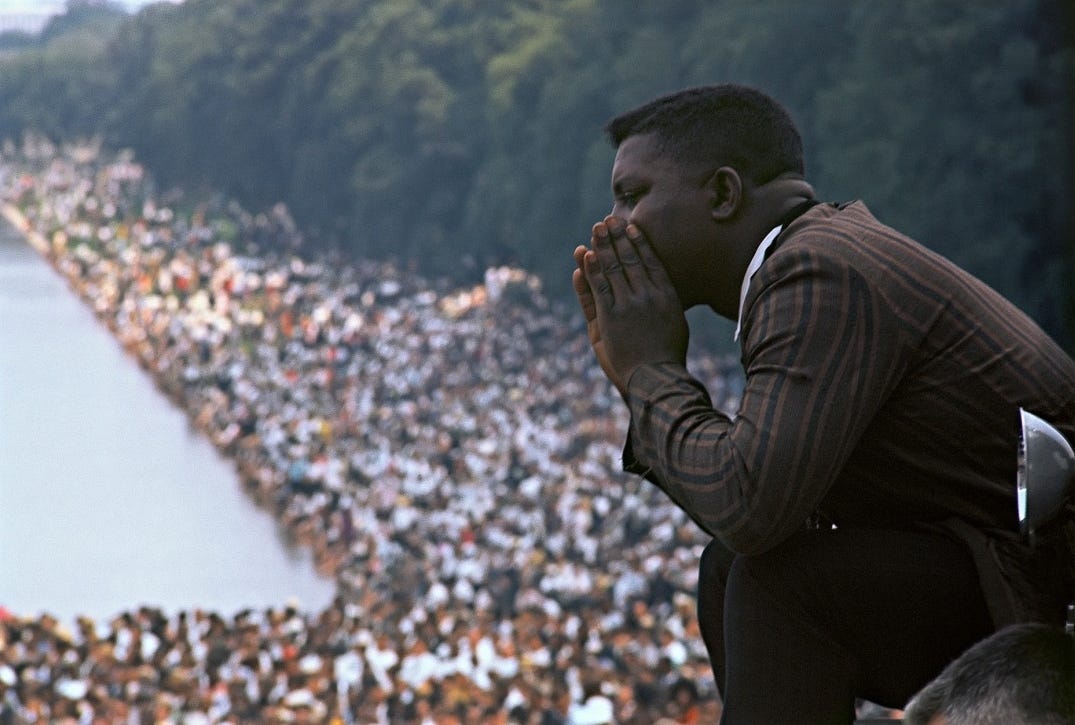
As a Black American, a key aspect of my culture’s history has been the painstaking process of renaming ourselves so that we are less attached to the dehumanizing names that white culture has forced upon us.
Generations of Black Americans have fought for the liberating power to accurately identify our community and live equally alongside other Americans. “Black Power” is not an expression of the master-slave dialectic and the irresponsible power of oppressing the Other. It is an expression of the liberating power that fuels equality and progress.
As a child, I identified as “black” or “African American,” but “African American” only became a part of our common vernacular in the 1980s, due to the late Rev. Jesse Jackson popularizing the term. My parents, who were born in the 1940s, did not grow up calling themselves African American. The were called “negro” or “colored,” and a word that is no longer socially acceptable to say, but is unsurprisingly being used with greater frequency today by defenders of white culture.
Also, my son identifies as “Black” with a capital “B,” and not a lowercase “b” which was the norm during my youth. My son is also part Mexican-American, so he is a modern manifestation of the Mexicanization that white culture has always feared.
When three generations of my family are in a room, we demonstrate this linguistic liberation. Who knows, but by the time my son has children, my culture may have created another term to define our equal and liberating identity and culture.
As Black people, we have fought for our physical freedom, but with that fight also comes a linguistic and psychological freedom. This freedom comes from encountering the Other as equals and not as subordinates who need to be oppressed or subsumed into a dominant culture. This creates a dialogue, relationship, and dialectic amongst equals; and as a result, our language and culture evolves in a progressive and not a regressive manner.
The epitome of our culture is not powerful morons who spew nonsense and sow division.
For the white Americans who celebrate equality, a similar linguistic journey of collective identity should also be in order. These white Americans also need to free themselves from the oppression of white culture.
As a Black man, I do not believe it is my place to tell white people what they should call themselves. That feels too close to an application of the master-slave dialectic, but I do believe that it would be wise to embark on the same type of equality-infused, defining conversation that Black Americans have engaged in for generations and Mexicans commenced when they embraced the full-humanity of their mestizo children.
We cannot forge a common people and save our democracy if we ignorantly empower a culture committed to inequality, division, and regression.
I think that the white supremacists who read this will get hung up on your choice to capitalize the B in Black but not the W in white. I personally have a strong distaste for “White Culture“ because anyone who uses the term either refers to the oppressive culture you describe or to the racist 1950s nostalgia culture of the Trumpist white supremacist. I don't like being identified by my race as it that's even a very important thing about me even though I recognize that I've enjoyed the privileges of my race, seen those privileges even out a little, and only now am witness to an administration that promises now to restore those privileges and then some. I did not think what is happening now was possible and I‘m still figuring out how to fight it. Anyway, this essay gave me a lot to think about.
Thank you, Barrett