

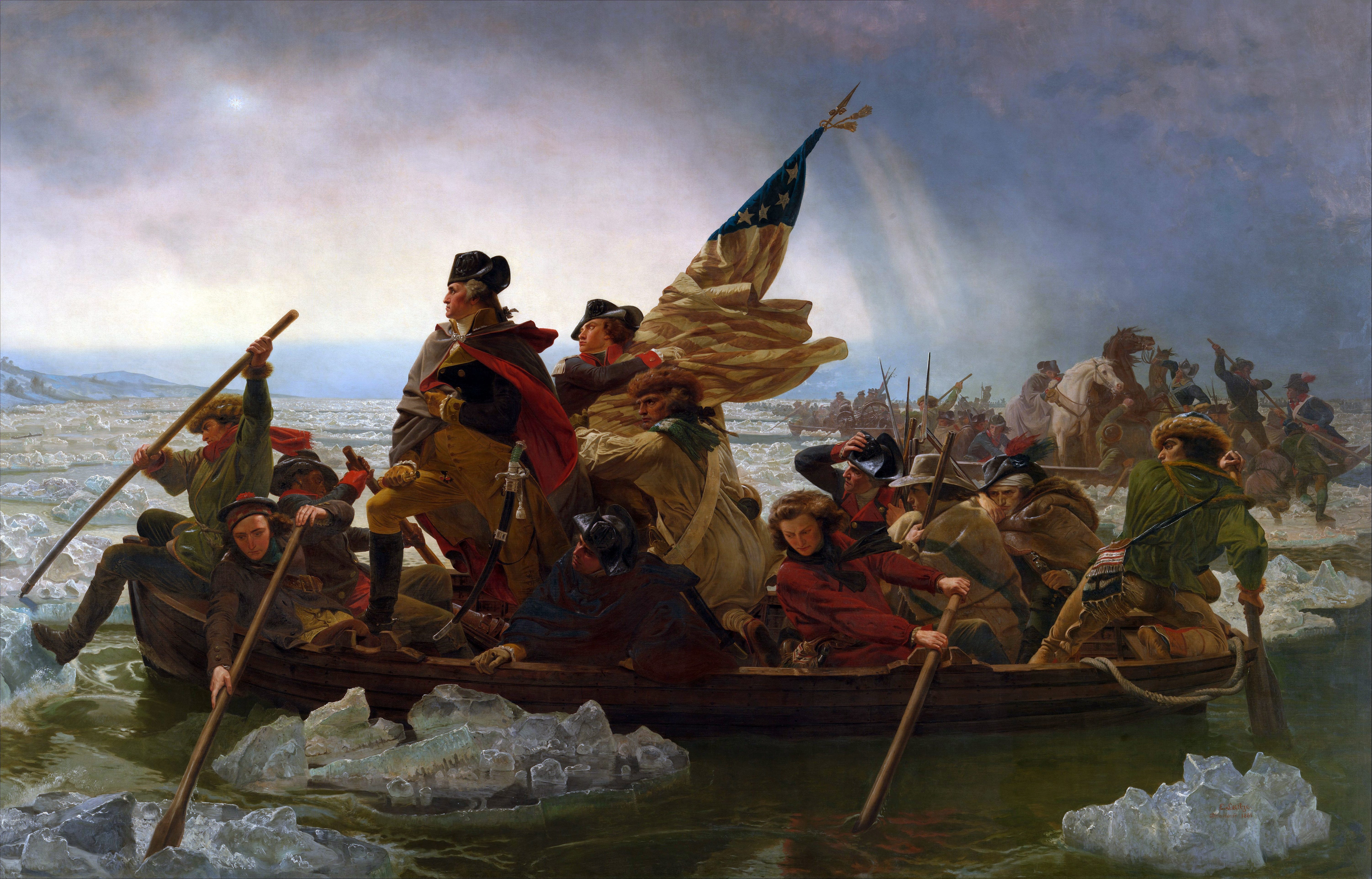
As America prepares to celebrate 250 years of freedom and independence, we must confront an uncomfortable truth—one that is far deeper than frustrations with the Trump administration: We have never adequately understood the meaning and practice of “freedom,” despite loudly proclaiming to be a beacon of it.
American “freedom” derives from the classical liberal ideals of European Enlightenment philosophers, such as John Locke, who focused on individual liberty. According to Locke, individuals are born with certain rights and need to be free “from” oppression to express those rights.
While this notion of freedom may sound both familiar and inspirational, it is also completely inadequate as a national axiom and has inevitably led us down a dark path of chaos, incivility, and the dismantling of freedom and democracy. This regression keeps occurring because America’s individualistic freedom focuses on only two of the three facets of freedom. I believe that an understanding of authentic, true freedom consists of three parts – “freedom-from,” “freedom-to,” and “freedom-with.” In America, freedom is primarily understood as only the first two.
“Freedom-from” is simply the capacity to be free from oppression and terror. American colonists wanted to be free “from” the British, and Thomas Jefferson famously enshrined the ideals of Locke and freedom-from in the Declaration of Independence. In 1689, in his classic, Second Treatise of Government, Locke wrote that people were born with the natural right to life, liberty, and property. In 1776, Jefferson modified Locke’s phrase and enshrined his individualistic ideals into the Declaration of Independence by replacing “property” with “the pursuit of happiness.”
Jefferson’s edit is significant because the meaning of “property” was far more expansive and sinister in a nation that condoned chattel slavery. By replacing “property” with “the pursuit of happiness,” he highlighted how, under the “freedom-from” paradigm, freedom is a pursuit. The liberated have the chance to pursue the freedom and happiness that they were denied under oppression. (A pursuit, by the way, that Jefferson never intended for enslaved Americans to undertake.)
When freedom is being denied, it becomes a pursuit.
Eventually, once people obtain their freedom “from” the Other, they now have freedom to express their natural rights. This is the manifested freedom of Locke and Jefferson – what I call “freedom-to.” In this stage, freedom is perceived as a possession. In “freedom-from,” people can pursue happiness, and in “freedom-to,” they own, possess, and have made freedom and happiness into their property.
When freedom is obtained, it becomes a possession.
As a result, people believe that sustaining freedom derives from protecting their property. In “freedom-to,” individuals can feel empowered to use lethal force and terror to prevent their freedoms and property from being taken away. Property and freedom can be seen as more important than human life itself. Stand Your Ground laws are a great example of this concept of freedom.
Freedom-to can quickly regress into a lethal struggle where people will use deadly force to protect their property, which they consider to be synonymous with freedom. American democracy was built around protecting the individual property rights of white colonizers, even when their property was enslaved persons. The justification for the Fugitive Slave Act was the defense of white property.
Despite being expressions of freedom, the individualism of “freedom-from” and “freedom-to” can quickly result in the erasure of freedom.
How Freedom Can Become Tyranny
For the majority of America’s 250 years of existence, freedom-from and freedom-to have defined how Americans understand freedom, but we have never been taught about how catastrophic this partial understanding of freedom can be. We have not been taught about how our concept of freedom can create terror.
In 1958, philosopher Isaiah Berlin published the essay “Two Concepts of Liberty” in which he describes “negative freedom,” and “positive freedom,” and also uses the terms “freedom from” and “freedom to” to describe each one respectively. (Berlin does not use hyphens.)
For Berlin, freedom from is a negative freedom because it is in relation to something negative. Negative freedom would be a person trying to be free from something negative, such as oppression or coercion. Positive freedom is the absence of this negative force and the freedom to do as one pleases.
Berlin’s analysis is similar to Locke’s and it creates its own demise because “freedom-to” is not positive. It is neutral or the unknown.
For the oppressed, the absence of oppression is certainly a positive event. It is an event that the liberated should celebrate, and Americans do this every Fourth of July, but the positivity of liberation does not guarantee that the formerly oppressed will not become oppressors.
The stage after liberation is a journey into the wilderness. People are free to do whatever they want, but there is no guarantee that their actions will be beneficial or positive. The initial liberation from negative freedom is positive, but the day-to-day reality of “freedom-to” is neutral or unknown, yet also incredibly prone to regressing back into “freedom-from.”
The regression occurs because, despite hatred of “freedom-from” and the inequality and oppression that comes with it, it still remains the main societal structure that the liberated know. They know hierarchies, division, and masters who hold power over the masses. It is predictable that the liberated may attempt to recreate this structure, but replace the evil master with a benevolent one. It is much harder to imagine, create, and sustain a new system than it is to recreate the old system and attempt to populate it with better people.
You can see this in the work of British political philosopher Thomas Hobbes (whose work influenced Locke) and his book Leviathan, which he wrote in the midst of the English Civil War in the 1640s and 1650s. Hobbes believed that freedom caused chaos, and that a stable society could exist when the free, uncivilized masses agreed to a social contract and relinquished some of their freedoms to a benevolent authoritarian that he called the leviathan.
Hobbes’ political philosophy is based on the belief that the freedom to do what you want will inevitably produce negative outcomes, and that the solution is to create “freedom-from” but make the authoritarian so benevolent that the masses never want to be free from the master.
You can see the manifestation of Hobbes’ political philosophy in the Southern slave owners who believed that the enslaved could not manage the responsibilities of freedom and that the lives of the enslaved were better under their master’s authority. During the Civil War, many of these enslavers were shocked when the enslaved fled the plantation for Union territory or burned plantations to the ground; they believed they had been “good” masters.
Berlin’s analysis is far less bleak than Hobbes’, but the outcome is essentially the same.
Berlin proclaims that the individual freedom or goal of his “freedom to” or positive freedom is “self-mastery” and to become the “master of all I possess.” The language of inequality permeates his analysis. Freedom is a possession and a property that needs a master, and now people need to relate to themselves as if they are a subject that they also need to dominate and master. The goal is to pursue and eventually possess self-mastery.
For Berlin, the purpose of positive freedom is for individuals to become their own masters who benevolently dominate themselves and everything that they possess.
For Hobbes, then, the leviathan arrives to help the uncivilized masses; while for Berlin, the individual becomes the leviathan.
When inequality has shaped someone’s world, it is predictable that they may recreate that world when they have the freedom to do whatever they want, but now they will turn themselves into the powerful instead of the powerless. This is not positive freedom, but a regression from freedom.
This is how freedom-to regresses back into freedom-from, and this is how freedom gets corrupted and turned into terror.
The erasure of freedom occurs because freedom-from requires an antagonistic relationship with another person or group of people, and a regressive freedom-to can view the Other as someone or something that is trying to take away the freedom that a person possesses.
We see this toxic dynamic in the constant and exhausting historical need to identify the Other as an enemy who’s either getting in the way of our individual freedom and success, or needs to be oppressed and marginalized because they are supposedly incapable of living freely.
Since colonization, Europeans have cultivated an unhealthy relationship with non-European people. In the U.S., that includes the genocide of indigenous people, the enslavement of African people, the abuse of Chinese immigrants since the 1800s, and today the demonization of Spanish-speaking and non-European immigrants.
This toxic, unequal, antagonistic relationship with the Other creates an iteration of freedom where one group of people—historically, Americans of European descent—believe that their “freedom” is contingent on other people in their society having less freedom than they, and that any attempts to counter the inequality would equate to a denial of “freedom” and a form of discrimination.
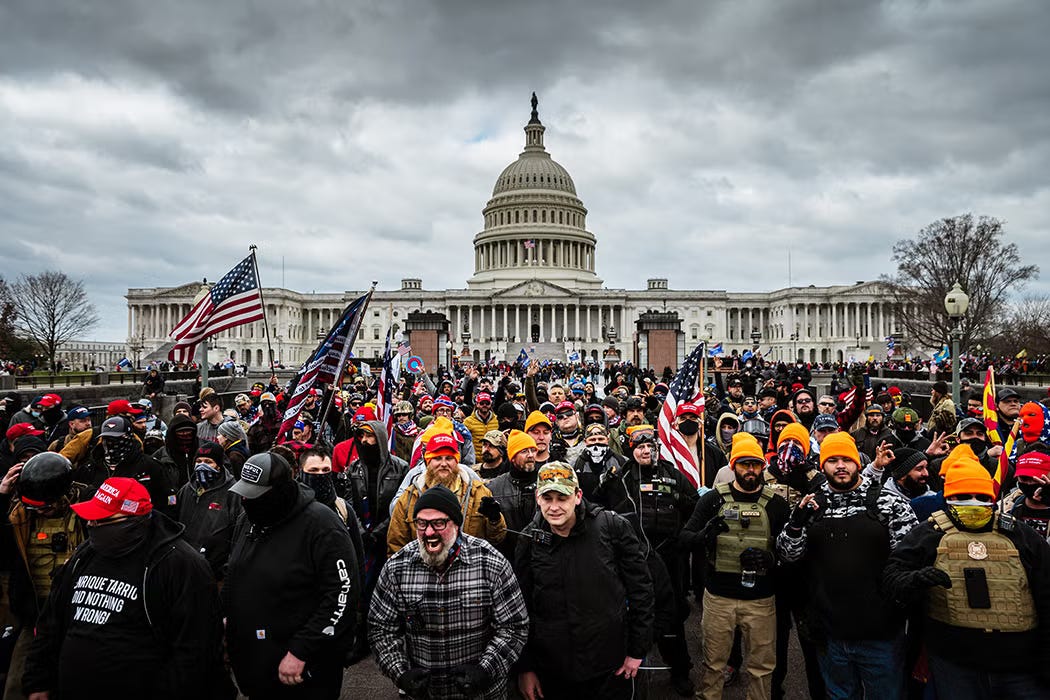
“Freedom-from” is the freedom of January 6th, Immigration and Customs Enforcement, segregation, and racial, religious, and ethnic division. Once the Other has been removed or marginalized, the “masters” will be free to do whatever they want. This is the freedom that the Trump administration wants to celebrate in July.
But this is not the only iteration of American freedom.
Reconstructing Freedom
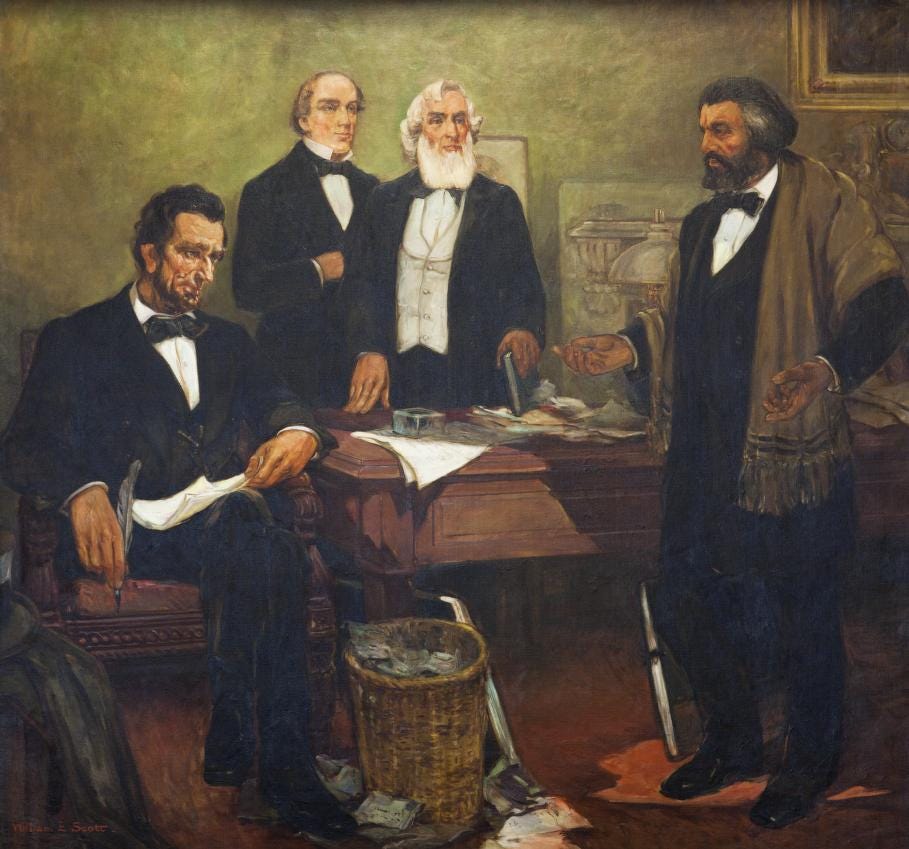
After the Civil War and during Reconstruction from 1865 to 1877, the U.S. government engaged in an audacious plan of redefining the meaning of freedom in America. This redefining, or reconstructing, of freedom aspired to create an iteration of freedom that was not contingent on being free “from” the Other, but instead being free “with” the Other—in this case being free with Black Americans.
For me, this was the dawning of “freedom-with” in America, and in this iteration, freedom becomes a shared practice among equals. This practice is evident throughout Reconstruction, and I believe this application of freedom equates to a radical philosophical break from the ideals of Locke, Hobbes, Berlin, and Jefferson.
When I think of “freedom-with” and the day-to-day practice of freedom, I think about my interactions with my friends, family, and random people I see every day.
My friendships persist because I engage in the regular actions to sustain and nurture that friendship. I randomly call them up. I respond to texts and pick up the phone if they call. I let them know that I will help them if they are in trouble. None of this is a casual or unintentional expression of friendship, but an intentional practice of being “free-with” another person.
Similarly, with my family, my goal is to be free with them for the rest of my life, so I try to do things to sustain and nurture our shared freedom. I take my kid to the park, do the dishes even when I don’t want to, I do fun things with my wife, and countless other things to sustain and nurture our shared life together. This is an expression of freedom-with.
When I walk down the street, go to my kid’s school, or enter a restaurant or store, it is normal to see me chatting and joking with someone, but this is not because I want to have a sense of mastery over a domain or myself. I’m doing this because I want to cultivate a shared sense of freedom, where people feel free with each other and believe that we exist to help each other.
Freedom-with makes life more enjoyable and meaningful.
Freedom-with is not individualistic and it does not have an adversarial relationship with the Other. Freedom-with is a shared freedom that extends friendship and hospitality to the Other.
Freedom-with is the practice of freedom, and it is the iteration of freedom that people should cultivate once they arrive at the wilderness of freedom-to.
Following the South’s defeat in the Civil War, the Republican Party found itself in the wilderness of freedom-to. It could remake America however it wanted to, yet the Republican Party chose not to regress back into “freedom-from.” They had just defeated the “freedom-from” of the South, so they knew they needed to create a new form of freedom, and the freedom of Reconstruction focused on extending freedom to the formerly enslaved. It was “freedom-with” at a macro-level. “Freedom-with” reconstructed the entirety of American freedom and democracy.
The Emancipation Proclamation in 1863 abolished slavery in the United States and the reading of General Order No. 3 on June 19, 1865, ended slavery in the formerly Confederate states, but the Republicans of the 1860s learned quickly that no longer being enslaved is not the same as having equal rights. The Civil Rights Act of 1866, which birthed civil rights and human rights in America, continued the expansion of freedom and the march towards equality, and the Freedmen’s Bureau helped provide economic and educational opportunities and resources to Black Americans.
The Fourteenth Amendment created birthright citizenship, guaranteed that all Americans received due process and equal protection under the law, and ensured that the Bill of Rights was federally enforceable. Prior to the Fourteenth Amendment, the word “equal” did not even appear in the Constitution with regard to human beings. Prior to Reconstruction, the Constitution cared more about equal voting procedures in Congress than viewing human beings as equals who could equally participate in American democracy.
Under Reconstruction, the federal government now had a mandate to promote racial equality, and this was a radical shift from the pre-Reconstruction status quo.
The Fifteenth Amendment extending voting rights to Black men, and the creation of the Department of Justice served to ensure that all Americans regardless of race, gender, or religion did not have their rights violated.
Despite the promise and transformational success of Reconstruction, we know how it all fell apart: Due to ongoing terrorism, voter suppression, and political maneuvering by former Confederates, Reconstruction lasted only 12 years. But the sticky fact remains that the fingerprints of Reconstruction and “freedom-with” are still all over American progress and what has made this nation great. The Civil Rights Movement of the 1960s and the presidency of Barack Obama would not have been possible without Reconstruction. And despite not having the language of “freedom-with,” it is pretty clear that those who have cared about civil rights, human rights, justice, and the rule of law understood freedom to be a shared practice.
It is much harder to engage in the shared practice of freedom if we do not have a name for this iteration of freedom. It is hard for someone to practice “freedom-with,” when they have never heard of it. And it is especially hard to practice “freedom-with” when America simply uses the catchall term “freedom” to describe three completely different iterations of freedom.
Reconstruction collapsed in 1877 because racist Southerners did not want to be “free-with” Black Americans, and they described the destruction of freedom and the return of the inequality and terror of freedom-from as the return of their “freedom.”
The former Confederates who retook control of the South called themselves Redeemers and pledged to “redeem” the region by undoing the progress of Reconstruction and returning the South to a pre-Civil War status quo. They destroyed freedom-with and promoted “freedom-from” with the “separate but equal” agenda that culminated in Plessy v. Ferguson and Jim Crow.
The Make America Great Again movement is merely a modern-day manifestation of the Southern Redeemers. The Trump administration’s attacks on civil rights and DEI, and the Supreme Court’s decision in Louisiana v. Callais amount to another attempt at erasing “freedom-with” and regressing into “freedom-from.” Yesterday’s 6-3 decision in Trump v. Barbara that preserved birthright citizenship represents another attack by the Trump administration and the Supreme Court to dismantle Reconstruction and the Fourteenth Amendment. Despite birthright citizenship remaining the law of the land, three Supreme Court Justices dissented and argued that parts of the Fourteenth Amendment are unconstitutional.
Similar arguments were made following the collapse of Reconstruction, and the gradual erasure of Reconstruction helped to create Jim Crow. The present mirrors the late 1800s and, tragically, this regressive cycle is how freedom has worked in America for 250 years.
As we head into this Fourth of July, looking for something to unite us and something to celebrate, at least now we know the type of freedom we need to embrace if we truly want to be a beacon of genuine freedom. “Freedom-with” one another is a language, a philosophy, and an animating idea that can lay the foundation for true freedom and America’s next Reconstruction.
#TreatPeopleRight