

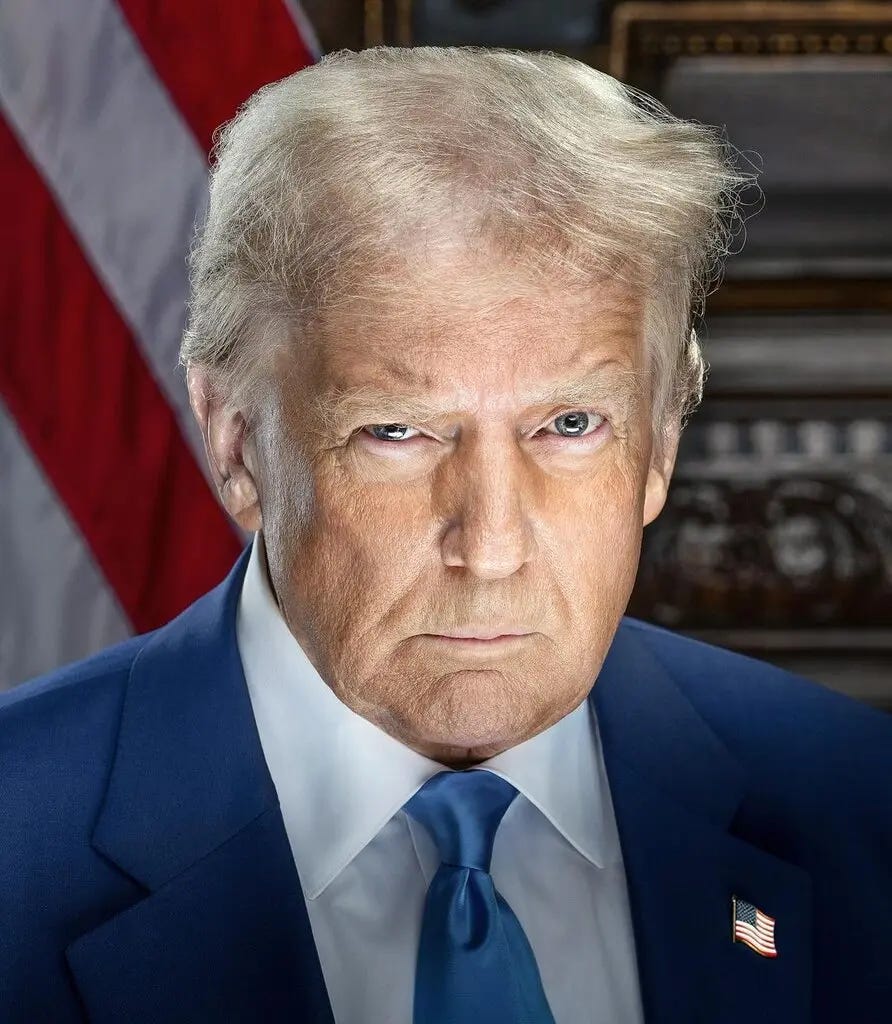
Last week, President Donald Trump sat down with the New York Times for a wide-ranging interview, in which he said that only one thing could limit his powers: “My own morality. My own mind. It’s the only thing that can stop me.”
Throughout the interview it became obvious that Trump’s understanding of “morality” consisted of exerting power, dominance, and supremacy over an Other. To Trump, the United States is a powerful nation with, therefore, a moral responsibility to exert that power. The moral necessity to exert power means that laws, treaties, and long-standing relationships become secondary concerns that can be disregarded if they threaten to impede Trump’s capacity to exert his “morality.”
Yet despite his emphasis on power, domination, and indifference to the law, Trump also said, “I’m not looking to hurt people.” This statement was published the day after ICE agent Jonathan Ross killed 37-year-old Renee Good in Minneapolis by shooting her in the face from point blank range.
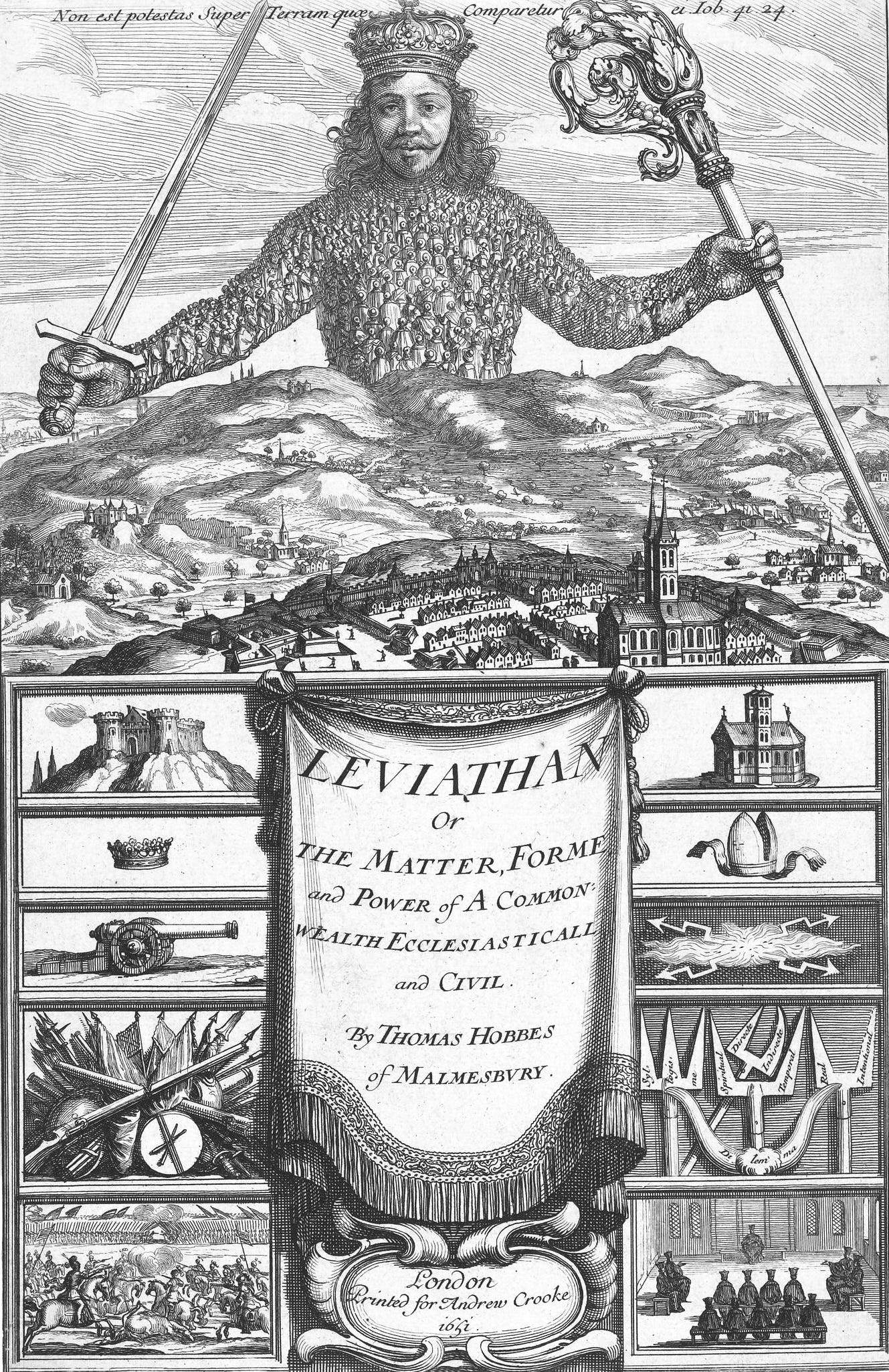
When I read Trump’s words, I immediately thought about the British political philosopher Thomas Hobbes and his book, Leviathan, published in 1651, which has been a staple of western political thought for more than three centuries. To me, Trump sounded like the modern-day embodiment of Hobbes’s leviathan, which was supposed to be an all-powerful force or entity that could control and dominate a society. For Hobbes, the leviathan was supposed to bring civility, but when I read Hobbes, I only saw the leviathan as a force for incivility and chaos.
Further, the power that Hobbes’ leviathan wields means that his words can become quasi-irrelevant because they serve only as a means for sustaining or acquiring more power. If Trump says, “I’m not looking to hurt people,” it does not matter whether Trump or someone else believes he means it; what matters is whether it affects his becoming more or less powerful.
Hobbes’ leviathan might not intend to “hurt people,” but his philosophy for governing the people remains one that requires harming many, many people.
Contracts, Nature, and Freedom-To
In Leviathan, Hobbes is most known for his theory of the social contract, countless bleak and troubling quotes, and two abstract concepts pertaining to “nature,” both of which I find bizarre, moronic and, frankly, dangerous. To understand Hobbesian political theory and how it explains Trumpian morality, we must start with Hobbes’ “nature.”
Hobbes states that all human beings have a “right to nature,” and this essentially consists of having the right to live and the capacity to use lethal force to defend oneself against threats to one’s “right to nature.” The right to nature could also be described as one’s right to exist. America’s “stand your ground” laws allowing people to use lethal force if they feel their life is at risk, is an expression of the right to nature.
For Hobbes, the right to nature is also an extension of individual liberty. Man gets to exist freely in the right to nature. Freedom is vital for existence, and this is why Hobbes says people should be able to use lethal force to protect their freedom.
All people are equal in their right to nature, and Hobbes theorizes that this equality will result in conflict because, eventually, one person may want what another person has, and they will believe that it is within their right to take it. Basically, if two people are equal then it would not be equal for one person to possess something that the other person believes they need, and since they are “equal” any ensuing fight would be a battle between equals.
In Hobbes’ right to nature, then, one will eventually view another’s possessions, property, and even their liberty as part of one’s own right to nature, or right to exist, and will feel justified in attacking the other and claiming these possessions as their own. As a result, Hobbes says, people will always need to anticipate and defend themselves against an Invader.
Hobbes argues that equality gives all people the equal power to attack, steal from, and invade each other, and freedom and equality will, therefore, result in constant warfare. This is why his barbarous philosophy is known for his grim quotes and bleak assessments of humankind. Below are some of Hobbes’ greatest hits.
“The life of man, solitary, poore, nasty, brutish, and short.” (Leviathan, Chapter XIII)
“To this warre of every man against every man, this also is consequent; that nothing can be Unjust. The notions of Right and Wrong, Justice and Injustice have there no place.” (Leviathan, Chapter XIII)
“The condition of Man is a condition of Warre of every one against every one: in which case every one is governed by his own Reason.” (Leviathan, Chapter XIV)
The last two quotes align with Trump’s reliance on power, violence, and his own morality, but Hobbes’ entire political theory highlights a troubling concept of freedom that remains pervasive throughout western civilization.
At The Reconstructionist, we talk about “freedom-with” and I have explained how the United States, and much of the West, understands freedom as a “freedom-from,” but there is also a third iteration of freedom, a “freedom-to,” that Hobbes is speaking to.
Basically, “freedom-from” is being free from oppression, and upon obtaining that freedom, the newly-freed want to be “free-to” do whatever they want. Notions of individual freedom are built around “freedom-to.” It is normal to hear people say that they want to be free from the government or free from an oppressive force, and the understood and often unspoken understanding with this demand is that once the “freedom-from” has been obtained, the people will exercise their “freedom-to” in a good way.
I do not think that there is any historical precedent to indicate that western civilizations will naturally use their “freedom-to” in a sustainable, nurturing, and good way; so I believe that “freedom-to” is a fairly meaningless concept. Freedom-to does not come with a philosophy that guides people how to use their freedom wisely and constructively.
Hobbes also did not believe that people would use their freedom-to constructively, and his political philosophy is built around the idea that freedom will result in chaos and incivility. The state of nature is the name that Hobbes calls the uncivilized environment that comes from freedom and the right to nature.
The uncivilized masses of his theoretical state of nature need a powerful force to govern them and save them from their incivility. Hobbes calls this force the “leviathan,” and he says that the uncivilized will agree to a social contract with the leviathan where they relinquish some of their freedoms to the leviathan, so that the leviathan can save them from the chaos that comes with freedom.
Hobbes’ social contract requires inequality and the rejection of freedom. It is antithetical to a democratic society, yet instead of being shunned, it has been embraced for over 300 years. Philosophers such as John Locke and Jean-Jacques Rousseau have also built their political philosophies around the social contract. The social contract has long-been a staple of western political philosophy, yet very little time has been spent on understanding the leviathan who creates the contract and deprives people of their freedoms while promising security and civility in exchange.
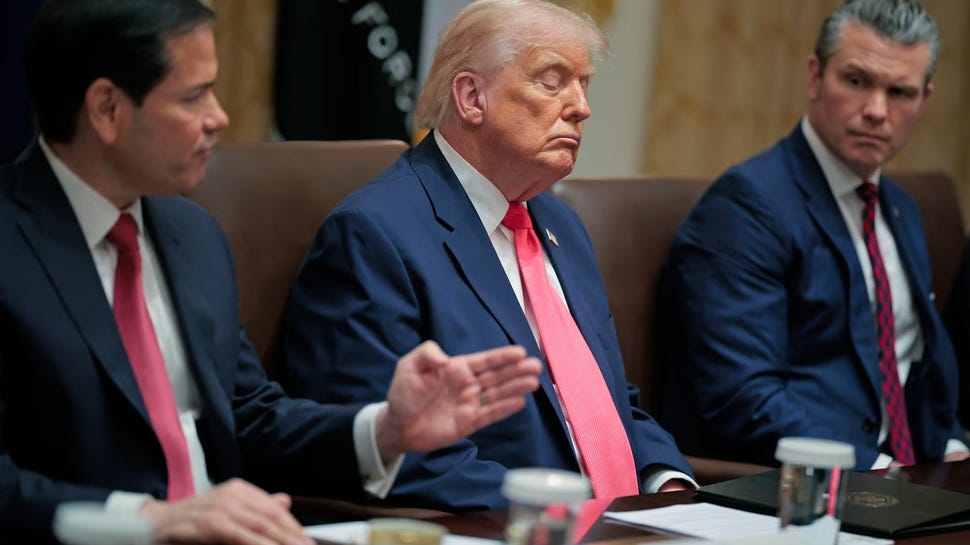
Trump has become a modern-day leviathan.
Trump and the Leviathan
Hobbes wrote Leviathan during the English Civil War during the 1640s and 1650s, and the all-consuming chaos and incivility of English life mirrored that of his theoretical state of nature.
The English Civil War pitted supporters of King Charles I, known as the Cavaliers, against the supporters of parliament, known as the Roundheads, against each other. It was unlike the American Civil War in that neither side occupied specific geographical terrain, but were equally distributed throughout England. Family members and neighbors fought each other and there was no refuge from the incivility. Hobbes wrote Leviathan as a means for theorizing how the chaos could end. Ironically, the chaos that caused the war came from the spread of freedom and knowledge throughout Europe, and this fact obviously was not lost on Hobbes.
Starting with the Protestant Reformation in the 1500s and the translation of the Bible into German from Latin, the people of Europe freed themselves from the authority of the Catholic Church. Their freedom-from Catholicism and freedom-to finally read the Bible emboldened Europeans to form new protestant sects and also challenge the authority of their monarchs. In 1534, King Henry VIII formed the Church of England and formally broke ties with the Catholic Church, and in 1611, the Bible was translated into English with the support of King James I, King Charles I’s father. Religious sects including the Puritans and Pilgrims formed in England and contributed to the chaos. Freedom empowered Europeans to invade the domain of the monarchy and the church, and the power of the masses greatly contributed to causing the English Civil War.
Europeans had their freedom-from, and they violently exercised their freedom-to, but they did not have a freedom-with. To end the chaos that allegedly comes with freedom, Hobbes theorized the need for a leviathan, which is a biblical creature mentioned and/or referenced in the Book of Job, the Book of Revelations, and other books in the Bible.
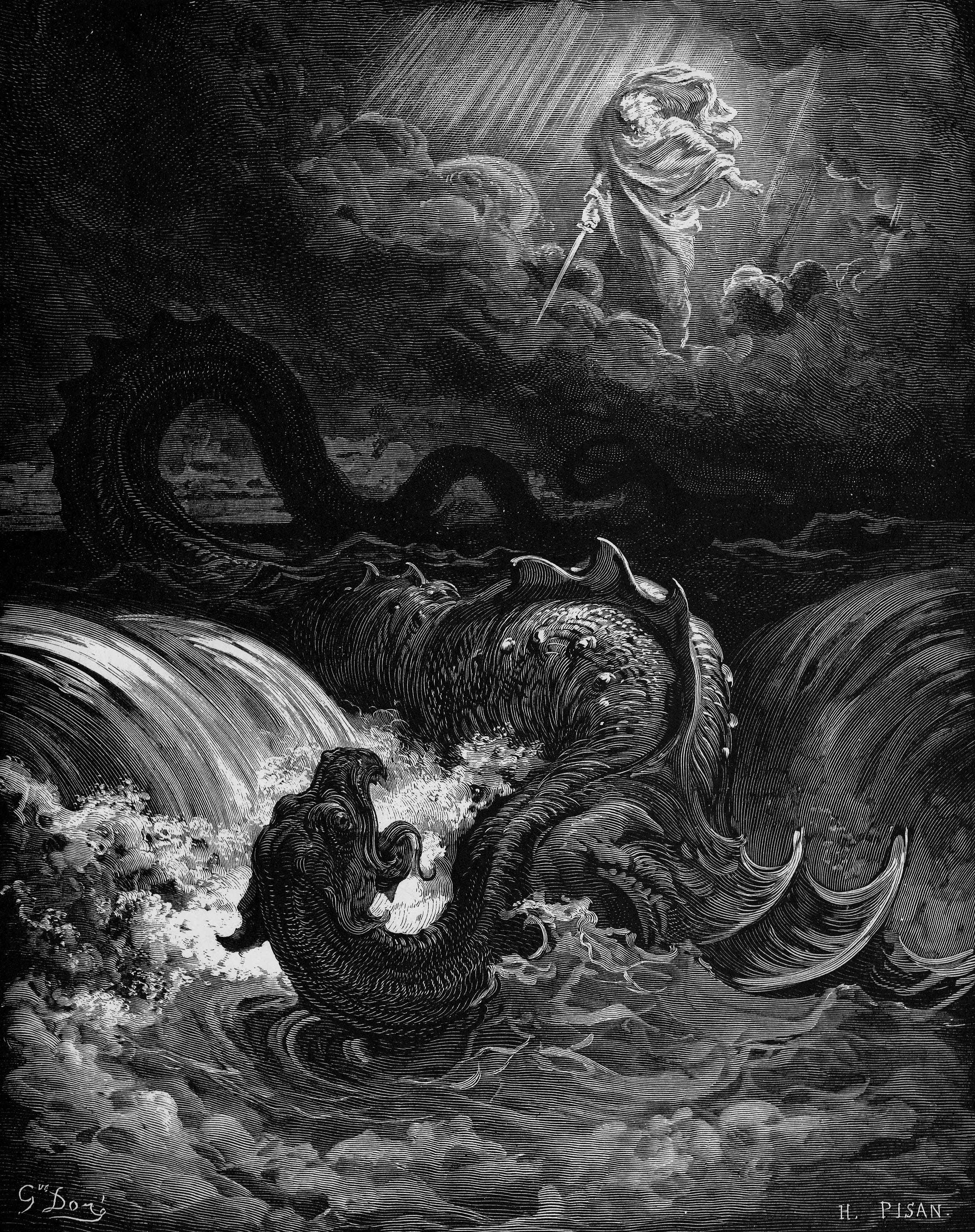
In the Book of Job, the leviathan is an all-powerful, serpent-like sea creature that cannot be conquered by any man, but only by God.
“Behold, the hope of a man is false; he is laid low even at the sight of him. No one is so fierce that he dares to stir him up.” (Job. 41: 9 & 10)
In Job, the leviathan is not depicted as being evil, but is defined by its unconquerable power over humankind. For Hobbes, the only way to end the chaos and incivility consuming England and Europe, due to the spread of freedom, literacy, and knowledge was for an all-powerful force to divinely intervene and persuasively force civility on the masses. The leviathan was not supposed to be evil, but the people needed to fear him and his power. To paraphrase, Trump, the leviathan, was “not looking to hurt people,” but his sense of morality derived from his power, dominance, and capacity to instill fear into the Other.
Hobbes argued that living under constant fear would prevent the masses from regressing into incivility because they would be too fearful to exercise their freedoms. And to make his point clear, Hobbes published Leviathan originally in English, and not Latin, so that the chaotic masses could read it.
Despite the incivility of English life being the obvious basis for his theoretical state of nature, Hobbes wrote that the state of nature existed outside of Europe and in America, in particular.
“It may peradventure be thought, there was never such a time, nor condition of warre as this; and I believe it was never generally so, over all the world: but there are many places, where they live so now. For the savage people in many places of America… live at this day in that brutish manner.” (Leviathan, Chapter XIII).
Even though Hobbes was living within a chaotic, uncivilized civil war, Hobbes claimed that Europe was civilized and the rest of the world was not, and now Europeans needed to be an all-powerful, all-conquering force that could dominate the uncivilized world. Europeans could save the world from the barbarity of freedom, show the non-European Other the alleged benefit of living in fear and being controlled by a European leviathan, and they could legitimize this oppressive, unequal relationship by forcing the other to engage in a social contract. Global dominance had become a moral responsibility.
Hobbes’ political philosophy—which dislikes freedom and equality and is clearly antithetical to democracy—aspired to end the English Civil War, but it also added fuel to the European fire of colonization and conquest. It failed in the former and succeeded in the latter.
Trump’s presidency, and entire political career, has been an expression of Hobbesian political philosophy. He controls the Republican Party through fear. He actively talks about invading other nations, taking their resources, and claiming that he has a right to do so. He deploys ICE and the military to American cities so that he can deprive people of their freedoms and force them to live in fear. He speaks in the language of business, so he always wants to make a deal or forge a contract, but he only wants to make arrangements that solidify inequality and ensure that he remains the dominant force. He also depicts the Other—Latinos, muslims, people of African descent, the LGBTQ community, and non-white immigrants—as an uncivilized animal that needs to be forcefully expelled from the United States or systematically marginalized and oppressed. As expressed in my last article, Trump’s reliance on power and an authoritarian philosophy can destroy America’s democracy and regresses our nation into an amoral rogue state.
Trump is an American leviathan. He is the embodiment of one of the most influential texts in western political philosophy. While he is more the rule than the anomaly, western society prefers to see Trump as a deviation from the norm because, like Hobbes, it wants to believe that the barbarity and state of nature derive from afar and not from within. The West wants to believe that they will use their freedom-to, or individual liberties, in a non-violent and civil way, but freedom-to does not come with a shared moral compass or philosophy. It is shaped by our own individual morality, and this is also what Trump professes to believe in.
By the end of the Bible, in the Book of Revelations, the depiction of the leviathan has changed. It is no longer a neutral yet all-powerful figure. The leviathan has become an explicitly evil entity that is aligned with Satan. The leviathan is depicted as a seven-headed sea monster and a beast that has caused global chaos, and the violent and moral ruin of humanity. It has coerced humanity into worshiping the leviathan and by extension Satan, and the only way for peace to return to the earth is through God defeating the leviathan.
In the end, God defeats the seven-headed beast and throws him into a lake of fire. Chaos and the leviathan are dead, peace has returned to the earth, and God makes a “new heaven and new earth” (Rev. 21:1).
Hobbes’s leviathan and our modern-day iteration are authoritarian figures that bring chaos in the name of peace, and true peace can only return upon defeating the leviathan. The leviathan’s reign will be nasty and brutish, but if we are to end the chaos that it brings, its reign must also be short.
Peace returns when the civilized masses defeat the leviathan.
Thank you for this totally brilliant piece. No doubt about it, Trump is the American Leviathan and must be defeated.
There appears to be a business model in political comedy (e.g. Stewart, Colbert, Oliver, SNL) and media (e.g. MSNBC, NYT Opinion) that is dependent on pointing out the Leviathan’s contradicting rhetoric and behavior.
If this point makes sense, are these models falling into a Leviathan trap?
Ask me to share more if this doesn’t make sense.