
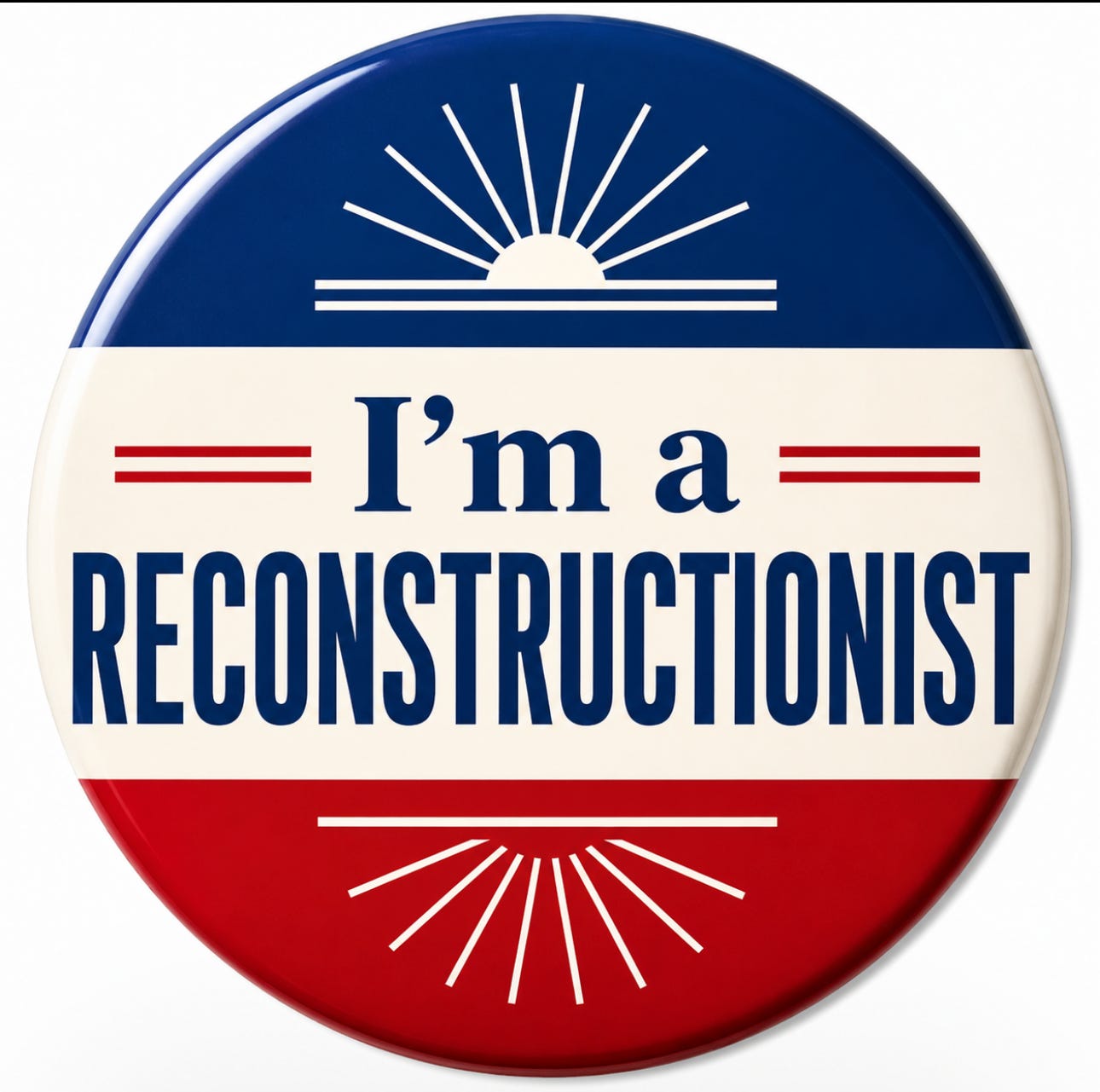
Although my twin obsessions right now are monitoring the political winds in New York State (go Mamdani!) and Washington, D.C. (go Janeese Lewis George!), I was actually born in St. Louis, Missouri, and I believe this state can help explain some of the current turmoil engulfing the Democratic Party and offer a big idea for a path forward.
The last two years, I’ve been intrigued by what seemed like a disconnect in the 2024 Missouri election results there. Donald Trump won Missouri in 2024 (by more than 14 points), yet voters also approved very progressive statewide propositions that year supporting abortion protections and a minimum wage increase.
Following statewide outrage from the US Supreme Court’s 2022 Dobbs decision, Missouri voters passed Amendment 3 in 2024 and amended its state constitution to provide the right to reproductive freedom. In 2024, they also voted to raise the minimum wage from $12 to $15 per hour.
And herein lies a dilemma that has confounded Democrats and the Left for years.
How do we appeal to an electorate that can support (dare I say trust?) Republican candidates for office, but is also an electorate that likes one-off progressive policies that address our collective panic about the cost of groceries, gas, rent, and health insurance premiums: Not to mention our shared distaste for endless wars, corruption, and corporations and billionaires not paying their fair share?
You appeal to the electorate by giving them something to vote for and not against. Voting against Trump was clearly not enough to elect Kamala Harris, but voting for reproductive rights was enough to amend Missouri’s constitution.
In 2024, the Democratic establishment kind of made a mess of deciding its presidential nominee and merely hoped that enough voters would want to vote against Trump. Now, in 2026, we see Democratic voters, especially younger ones, coming out in waves in certain areas to vote for DSA candidates like Zohran Mamdani and Janeese Lewis George because they believe they are voting for something.
To unite the country together in 2028, the Democrats need a unifying way to talk about themselves: maybe not as progressives, maybe not as leftists, maybe not as democratic socialists. They need an identity that unites Americans, celebrates diversity, and inspires Americans to rebuild our democracy after the chaos and destruction of Donald Trump.
I suggest we stand up and call ourselves Reconstructionists.
The word Reconstructionist is a direct reference to the particular moment in history and a particular legal mindset that emerged after the Civil War. The moment in history when we did what was right – ending the abhorrent practice of slavery, passing the 14th amendment to establish due process and birthright citizenship and equal protection, laying the framework for civil rights as we know it, and creating the Department of Justice, the Department of Education and so much more. So many positive values in the American struggle for civil rights and human rights are an outgrowth of the bold thinking of Reconstruction.
The progress of the Civil Rights Movement of the mid-twentieth century would have been impossible without Reconstruction. Civil rights, voting rights, interracial marriage, Roe v. Wade, and so much more are clear outgrowths of the legal and cultural precedents of Reconstruction.
Reconstruction created multiracial democracy in America. Being a Reconstructionist means telling an authentic version of American history and being unafraid to reconstruct America into a freer and more equal society.
I came to this theory through my friendship with a political philosopher named Barrett Holmes Pitner. That’s right, a philosopher – not a pundit, not a consultant, not a would-be candidate – but a philosopher who is wrestling on a daily basis with the ideas behind our politics and our policies. I met him a few years ago at a moment when I was tired of talking about what Democrats were against, and desperate for us to have a unifying philosophy and set of strategies that we could be for. Of course I love the raw energy of “no kings,” but what happens after we get rid of the king? What are we then united around? How do we reconstruct America after we defeat the king?
As we watch this Trump administration dismantling the rule of law, federal agencies, medical research, healthcare, SNAP and education funding, and so much more, we need to be clear-eyed that it won’t be enough in the coming years to simply unwind these changes. We will need to “reconstruct” America in a post-Trump world much the same way we did after the Civil War.
Last fall, Barrett and I started co-hosting Reconstructionist Salons in my historic, Reconstruction-era DC townhome. People are off their phones and sitting together in one room planning for a better future. In these salons we bring together political scholars, philosophers, artists, activists, educators, lawyers, career public servants and lots of students and we talk for an hour or two about what we need to do to reconstruct democracy.
One of the most important deliverables of our salons so far–alongside friendship, fruity seltzer, and light snacks–has been the drafting of a framework for a 28th amendment to the U.S. Constitution that would address topics such as voting rights, civil rights, bodily autonomy, DC statehood, abolishing the Electoral College, and so much more. What could be more Reconstructionist than a constitutional amendment?
We’ve also advanced the work of The Sustainable Cultural Lab’s Altar America Project, an annual ancestry remembrance practice. What could be more Reconstructionist than strengthening American culture by honoring the true stories of our ancestors?
And in our Salons we’ve also cultivated friendship and joy - among a disparate group of people who are not giving up on America. We know that existing systems and institutions weren’t working for everyone (For starters, I’m looking at you medical research experts who for far too long overlooked women’s health issues.) When we reconstruct democracy and America after all this current nonsense, we need to build systems that protect and uplift the most vulnerable in our society – NOT corporations and billionaires. What could be more Reconstructionist than bringing together people from different lived experiences in joy and friendship to imagine a better government?
As a person who grew up and lived not only in Missouri, but also in Kentucky and Colorado and Washington and Michigan and Illinois and Tennessee, I want to unite the Left in a vision of something we can all be “for.” I think the next Democratic presidential candidate (who are you? where should I be looking for you?) should consider the word Reconstructionist as a way to describe their campaign, their political philosophy, their legal philosophy and, eventually, their governing philosophy. I also want artists and musicians and poets and authors and cartoonists to take up this challenge – to help us creatively imagine what it means to be a Reconstructionist. I’d love to welcome all of you to a salon, and discuss big, world changing ideas in my living room.
Let’s do this together. Let’s be Reconstructionists. Together. Let’s talk with enthusiasm and animation and ambition about the things that we are going to do when we get this corrupt fascist out of government. Let’s make more plans together. Let’s Reconstruct America.
—
Ann Binstock, MPH, is a Communications Advisor and Political Strategist who’s an expert at creating momentum from ambiguity.
👏👏Love this, Ann! Inspired and beautifully laid out.
This is clear articulation of what I have been thinking and talking about in my communities. Thank you Ann!