

I am a Reconstructionist.
I believe in preserving and advancing the ideals that emerged during Reconstruction from 1865 to 1877.
During this period, the United States underwent a profound attempt to expand the boundaries of American democracy and redefine who could fully participate in basic freedoms. Formerly enslaved Black Americans and their white allies fought to secure citizenship, political rights, and greater equality, while pushing the country towards a broader understanding of what freedom could mean. The constitutional changes that emerged from this period, including birthright citizenship and equal protection, became foundational to later civil rights movements.
But most importantly, I am a Reconstructionist because the beliefs provide an empathetic way of living that constantly remind me to be present and kind, while remaining principled enough to challenge injustice and stand up for the rights of others.
Reconstructionism is a historical and political philosophy that offers an inclusive, humanizing approach to life. Over the past few years, it has become woven into how I understand the world and how I walk through it. I consistently find myself recognizing Reconstructionist principles in all aspects of my life, without consciously trying to.
Reconstructing My World After COVID
To give some general background, my mother is an extremely empathetic and inclusive person who raised my brother and me to treat others with the utmost kindness and to try to do good in the world. Growing up in Westchester, New York, I was raised in a progressive bubble. Between my mother, my town, and my education, many of the ideas I was taught to believe felt less like a political position and more like the basic principles of being a good person.
Then I became a freshman in high school, and COVID happened.
Growing up during COVID was uniquely formative for my generation. Before, the world I knew felt very much like a “go, go, go” culture. So much of what I understood as culturally important –school, graduation, prom, sports, work, travel– was tied to institutions and milestones that suddenly disappeared overnight. We were sent home, separated from our friends, and forced to question things that had previously felt permanent and important to “American culture.” Being removed from school and other daily institutions made me ponder if what I had been taught to value actually contributed to a meaningful life. Not being able to see people also made me realize how important relationships and community are to happiness.
At the same time, I was experiencing one of the most politically and socially intense periods of my life. Everything seemed to happen so quickly, with lockdown beginning in March and the tragedy of George Floyd’s murder that May. That summer was filled with Black Lives Matter protests, followed by the 2020 election, both of which brought an enormous political conversation online.
In June 2020, Black students and alumni from my high school started an Instagram account which disclosed their experiences of racism at our school. Another account was created shortly after also exposing the homophobia endured by queer students. These accounts garnered hundreds of followers, posted hundreds of submissions, and revealed some unacceptable behaviors that deserved repercussions. My school responded with accountability, firing faculty, addressing the accounts to parents, and implementing changes, such as curriculum shifts and community engagement events, pledging to be more considerate and aware going forward. I witnessed my school and the adults running it make mistakes and then try to fix them by looking at the past through the lens of race and with a newer understanding of systemic racism.
As I was growing into adulthood, I saw the world I knew suddenly come to an end, experienced my community reckon with past traumas that had been ignored and covered up for decades, and watched people come together to try to make a better environment for everyone.
Looking back, I realize just how lucky I was to have grown up with these ideas as my norm. The freedoms, opportunities, and assumptions I grew up with are far from universal. I knew from a young age that I was privileged. I understood that having a home, enough food, an education, and the opportunity to grow up surrounded by people who cared for me were things not every child in the world had. However, as I’ve gotten older and become more exposed to politics and the realities of how differently people experience this country, I’ve come to appreciate the privilege of being socialized to think kindly about other people.
I thought my youth had been a politically heightened time, but I had no idea what was to come in my post-COVID adult life. The 2024 election was the first time I could legally vote. Since then, I have watched the political climate around me become increasingly even more polarized. Racism, sexism, xenophobia, transphobia, and other forms of bigotry have become a part of everyday political discourse. It is unsettling to watch people and institutions that are supposed to protect and represent us spew so much negativity into the world and make decisions that cause harm. I have found myself angry at my phone, at companies, at political powers, and even at my own college for the positions they have taken during times that feel so difficult to navigate. I am frustrated by how easily people are divided, how quickly conversations turn into arguments, and by how scary it can feel to try to imagine a way forward when people seem to disagree about almost everything.
Reconstructionism and Practicing Freedom-With
When I joined the Reconstructionist Society in 2025, I initially understood Reconstructionism as a political philosophy rooted in a particular moment in American history. I was drawn to the idea that, rather than borrowing entirely from existing political frameworks, we could look to our own history for a distinctly American tradition of democratic thought.
Over time, however, I see Reconstructionism as something much broader than just a network of people who share the desire to revitalize our current political philosophies and move toward a more progressive form of governance through collaborative dialogue. That shared pursuit holds us together as a community of Reconstructionists, and I believe it is a necessary foundation for having meaningful conversations and, ultimately, creating genuine change, but it is not what has kept me here. Reconstructionism has given me a language to understand a way of thinking I already had, while also challenging me to think more deeply about what those beliefs actually require of me.
One idea that has stayed with me most is the distinction between Freedom-From and Freedom-With. Freedom-From can describe freedom as independence from any interference or restriction. Freedom-With begins from the recognition that our relationships with other people also shape our freedom. It encourages us to engage with people who are different from us, to listen, to disagree, and to continually expand and redefine what equality can look like.
I deeply value the relationships that I build with others. My friends and family are among the biggest north stars in my life. As such, the idea that freedom is not only something we possess individually, but rather something we create with one another, resonated with me immediately. Reconstructionism has made me think more intentionally about the way I interact with people, how I approach disagreements, how I solve problems, and how I communicate. It asks me to practice empathy, reflection, communication, and collaboration, not because I have mastered any of them, but because I want to keep getting better at them.
I experience the principles of Reconstructionism daily.
This past weekend, I was in a Lyft and somehow ended up talking about Reconstruction for the entire ride. By the time I arrived at my destination, the driver, Phil, had offered me a gig making a short documentary for him. At first, the fact that he offered despite knowing me for a mere 20 minutes seemed funny and a little abrupt, yet when I really sat with it, I realized that this choice was a direct result of a Reconstructionist approach to connection. I have found that once you have a shared language for the things you care about, you start discovering it in unexpected places. If Reconstructionism had only given me a new political vocabulary, I don’t think I would be writing this article. What has kept me here is how it has changed the way I interact with other people.
Reconstructionism has helped me become a better person, and that’s bigger than politics.
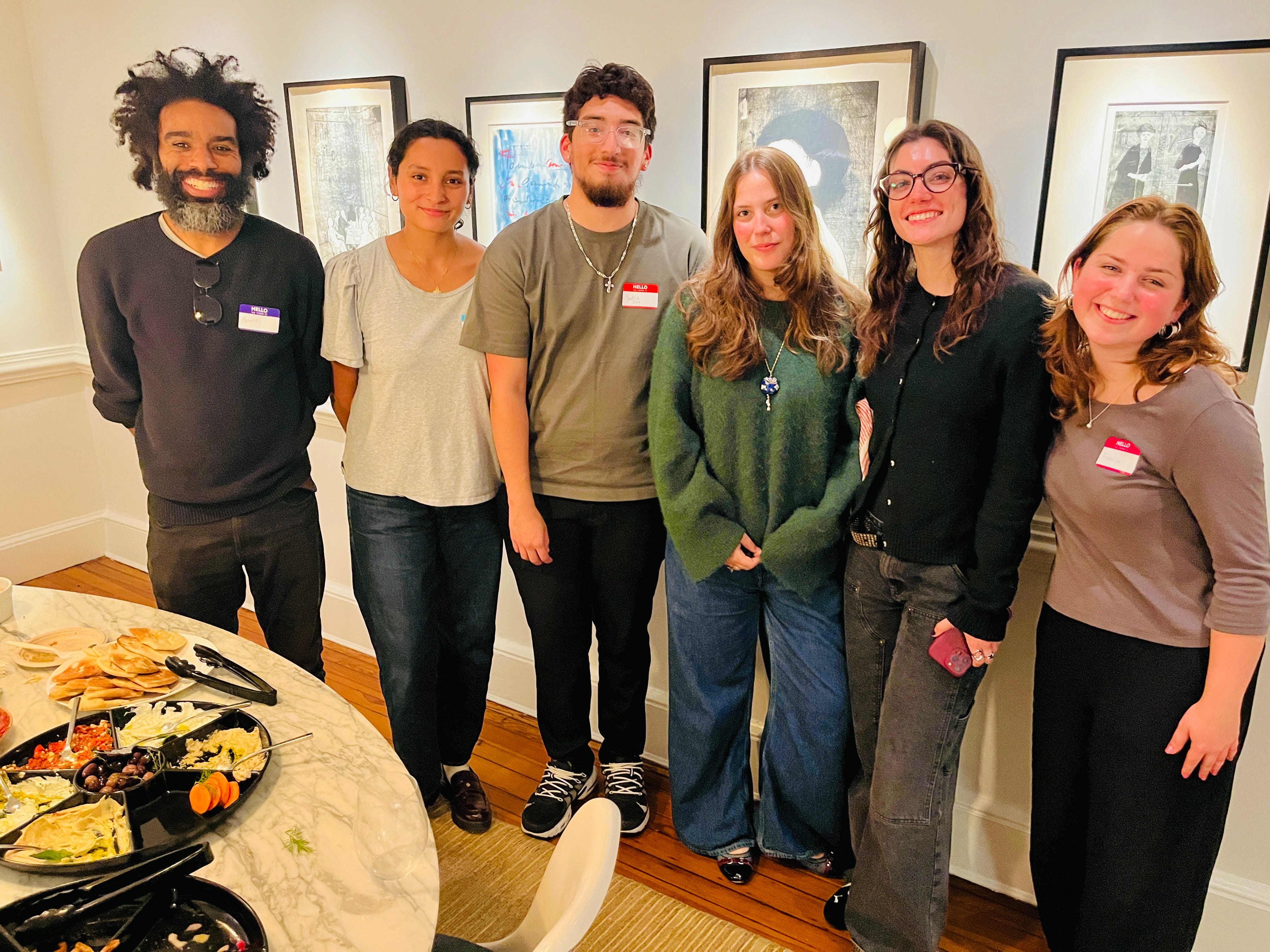
Lauren Varino is the president of the George Washington University chapter of The Reconstructionist Society

Loved reading this and was surprised to see that there is a group of Reconstructionists at your school. Are there more chapters?
Beautifully stated Lauren. Thanks for sharing these thoughts and life experiences. And best wishes to you for a fulfilling future as an active Reconstructionist.